Sometimes I get paid to write text that gets people to take action. That’s conversion copywriting.
This article is different. It’s SEO copywriting that helps Crazy Egg gain visibility in search results by providing helpful content.
I’ve already been paid for this post. I have nothing to sell you here.
What you’ll get instead is a short introduction to conversion copywriting and real examples of it from brands that are growing fast because their copy converts.
What Is Conversion Copywriting?
A conversion is an action that you want people to take, like a signup or a purchase.
Conversion copywriting is text that encourages people to take that action.
If you are a conversion copywriter, then you are responsible for choosing words that increase the number of people who take action.
Your writing will be judged based on the conversion rate, which measures the number of people who took action compared to the total number of people who saw your writing. Here’s the equation:
Conversion rate = (Conversions ÷ Total Visitors) × 100
The higher the conversion rate, the better the text performed.
Conversion rates are easy to measure on websites, landing pages, social media posts, product descriptions, email campaigns, video sales letters, and other digital assets where your writing may appear.
In print and on billboards, conversion rates are more challenging to measure, but it is still possible.
This is all to say that conversion copywriting is an objective sport. There are lines on the field. There are winners and losers.
It’s not poetry or politics, where half-truths and flowery language can pass for greatness if the “right” people anoint it.
No one cares how beautiful the writing is or how smart it sounds. The only value is whether or not you can get more people to take the next step.
Important note: You do not need to be a “writer” to do this well.
In fact, many people who identify as writers are awful at writing text that gets people to convert.
Do not worry if you are a founder, business owner, or entrepreneur who needs to do some conversion copywriting. It’s tactical gruntwork that is not so different from many of the other business tasks you have to get done.
Copywriting along the conversion funnel
Brands use the concept of a conversion funnel to model how potential customers become paying ones. Funnels are wide at one end, illustrating the large number of people exposed to your brand, and narrow at the other, where only a fraction wind up becoming paying customers.
The final conversion, where someone actually takes out their credit card, is preceded by several micro conversions, where a customer gained awareness about your brand, began to trust you, and decided that your offering was worth the money.
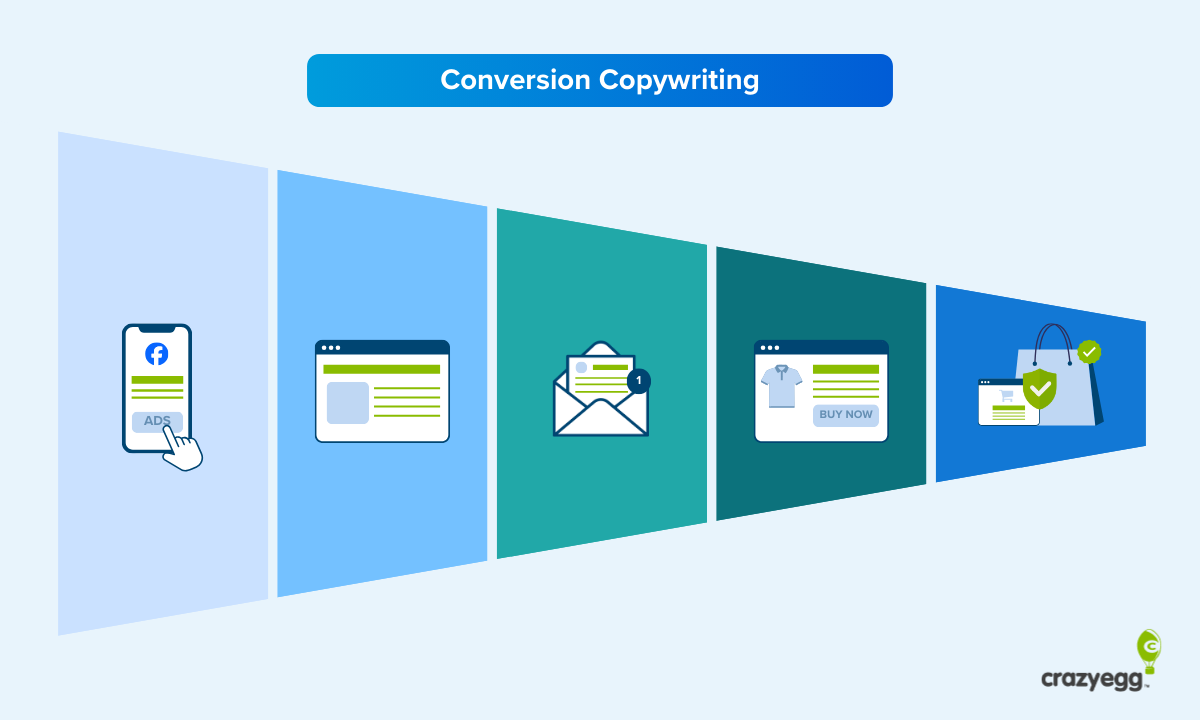
At each of these points, the copywriting plays a role in whether or not the customer chose to move closer to purchase.
Consider this example customer journey through a funnel:
- The headline of a Facebook ad stopped a person from scrolling
- The text of the ad convinced them to click through
- The landing page they arrived on spoke to their fears
- The call to action encouraged them to sign up for emails
- The email subject line stood out in their inbox
- The email body copy conveyed a tantalizing product benefit
- The product description page handled their objections
- The checkout page reassured them with microcopy trust signals
This process may have played out over weeks, across multiple ad views, emails, and shopping experiences.
At every step, the writing helped move the person through the funnel.
Or it confused them, created doubts, made them lose interest, and then they’re gone.
Of course, there are factors beyond the writing that contribute to whether or not people complete a purchase or drop out of the funnel.
But copywriting plays a huge role, and brands that want to increase the conversion rate spend good money on getting the text right at each stage.
A Crash Course on Conversion Copywriting
Everything you need to know to write successful conversion copywriting falls into two buckets:
- The customer you are trying to convert
- The context in which they encounter the writing
Every decision you make about the text should follow from those two concepts. If a manager or editor asks why you wrote what you wrote, you must be able to tie it back to both.
When you can do that, you sound like you have your act together. You have proven that you know what you are doing and why.
Whoever is paying for the writing may disagree with you. They may tell you to revise what you wrote, or even to scrap it and start over.
But they won’t think you are a moron or a hack who has no idea what they are doing.
That’s important, because your copywriting is not always going to convert. The best conversion copywriters have a higher percentage of wins than mediocre ones, but nobody scores on 100% of their shots.
When you put forward strong copywriting that speaks to the customer and the context, you are taking a good-looking shot.
That is the best you can do.
Nobody knows what’s going to work. That’s the truth in marketing.
The people who survive are good at finding ways to take lots of shots, and giving their shots the highest possible probability of success.
Let’s walk through how to understand the customer, the context, and start drafting copywriting that converts.
Understanding the customer you are trying to convert
Most people don’t want your product and they never will. That’s okay!
Copywriters only need to address potential customers, who are the relatively small sliver of people who have a reason to use your product or service.
The more accurately you can define this target audience of potential customers, the better you can craft copywriting that speaks to them.
Most brands create some form of buyer persona that captures the essential details that separate their potential customers from everyone else on the planet. It describes:
- Who they are: the essential characteristics of buyers, such as demographics and psychographics for B2C brands, or firmographics and technographics for B2B brands.
- What they want: the goals and outcomes they hope to achieve by buying your product, such as saving money, increasing revenue, or improving customer experience.
- What motivates them to buy: the problems or opportunities that trigger people to start searching for a new solution instead of doing what they’ve always done.
- What gets in their way: the common objections or barriers that keep people from buying, like high costs, uncertainty of outcomes, or the fear of making a bad decision.
- What they care about: the criteria people use to make a selection as they weigh the pros and cons of purchasing, like price, features, reliability, or reputation.
- How they buy: the steps buyers take and sources they consult on their path to purchase, like reading reviews, comparing options, booking demos, or asking peers.
When you know your customer, you know what you can say that will resonate with them.
For example, if your buyers tend to be highly-technical founders who have already shopped a few of your competitors, you can jump right into how your product is different and speak to startup metrics like ARR you know they are keen to drive.
But if your buyers tend to be new small-business owners, you might want to lead with a gentler introduction to the product category before diving into where your product sits among their options.
With a solid buyer persona, you also know what to emphasize. You can use persuasion techniques that lean into the real hopes, goals, and fears they have about making a purchase.
There’s no reason to try to speak to everyone with your copywriting. The vast majority of humanity doesn’t care about what you offer and no amount of marketing is going to change that.
By focusing your attention on the specific people your brand can serve, you can better speak to what they really care about.
Tips for researching your customers:
- Talk to them. Interview your best existing customers. Use surveys on your site to connect with potential customers while they browse and find out what they are most interested in.
- Listen to them. Go back through transcripts from sales and service calls. Find themes and patterns. What matters most to potential buyers? What do people have a hard time understanding about your product and what it can do?
- Research your target market. Define the boundary between the people who could use your product and everyone else.
- Read reviews and forums. Find out what today’s customers love and hate about the products in your space, and especially what drove them to seek a new solution.
- Analyze your competitors. Gauge how they are trying to appeal to buyers and which of their strategies appear to have the most traction.
- Reverse engineer search results. Research keywords related to your products and work backwards from what Google recommends to discover what people find valuable.
Understanding the context in which your text appears
A headline for an ad that will appear in a social media feed has a different job to do than the FAQ text of a dropdown on a pricing page.
In the social media feed, headlines need to stand out from the rush of exciting videos and images that a person is swiping through. It’s fine, maybe even mandatory, to write something sensational and click-baity in order to get someone to click through.
On the pricing page, the FAQ text cannot be sensational in the slightest. You have the reader’s full attention, so there is no need to “hook” them. The text must be accurate, simple to understand, and reassuring to a reader with a specific question in mind.
In these examples, it’s easy to see how successful conversion copywriting is conscious of where the reader encounters it. Understanding this context and how it constrains the type of writing that will work is crucial.
You should be aware of:
- Where the text will appear: this includes the specific channel, timing, or location on the page, such as above the fold on a landing page or published on LinkedIn during lunch hours.
- Where your text occurs in the funnel: this speaks to the goal your copy needs to accomplish at a particular stage, such as trying to capture interest, educate people on the product category, or build trust in your solution.
- Where in the journey buyers are: this speaks to the likely awareness of your buyers, such as just figuring out they have a problem or actively comparing a shortlist of options.
- What’s happening in your industry: this includes anything that would shape how buyers are likely to perceive what you write, such as the trends, threats, and competitor campaigns.
This context constrains what your copywriting needs to do and what you can expect of a reader. These constraints are productive. They will help you determine what is likely to speak to the person in the moment.
Considering the funnel stage is crucial because your goal is different at each one. Text that helps capture someone’s attention is very different from that which will push someone who’s already knowledgeable about your brand to a final decision.
You also want to be conscious of the buyer journey, which unlike your funnel, is shaped by many forces outside your control. What is their likely headspace as they read your copywriting? What else have they seen along their path to purchase that you ought to address?
Conversion copywriting has to be conscious of what’s happening in your industry. Your brand is one of many options that customers may be familiar with or actively considering. Competitors, trends, and big news in the space will shape how buyers interpret the words you write.
Tips for incorporating context in your copywriting:
- Know what surrounds your text: Is it images on your site that you can control, or is it other ads on a search results page that are trying to appeal to the same types of buyers?
- Think about the reader’s headspace: Where in their journey are they likely to be? What are they trying to solve at this moment? What do they need to hear to feel secure about moving forward?
- Ask what’s changed: What is different about this moment than if you wrote the text six months ago?
- Show alignment: What can you say to position a relationship with your brand as a win-win? Think about where they are at, what they want, and how your brand can help them get there.
- Match the traffic source: Do you know where readers came from? Someone coming from a highly technical keyword search on Google needs different copywriting than someone who clicked a curiosity-driven ad on social media.
Bringing it together
Every decision you make in conversion copywriting can be defended by returning to the customer profile and the situation they’re in when they encounter it.
When someone asks why you made a particular decision, you can ground your answer in real and relevant data.
For example, “I chose to emphasize long deployment times as a pain point on our LinkedIn ads because our existing customers stressed this was the major factor in their decision to switch, and people on G2 complain constantly about the complex setup with our competitors.”
That’s a great answer that will make any editor respect where you are coming from.
On LinkedIn, you can expect that this relatively technical pain point to resonate with the white collar crowd, and you’ve tied your choice back to both first-party and third-party data on what real customers care about.
You don’t want to be stuck in the position where you don’t have a compelling reason to explain your copywriting decisions.
When you show that your choices are backed by data and research, you put yourself in a much stronger position, regardless of how the writing ultimately performs.
Further development
To keep improving your ability to convert, there are tons of great resources out there.
There are lots of great copywriting articles and blogs dedicated to CRO (conversion rate optimization) where you can learn from experts in the space.
There are also some solid books on advertising that deal specifically with direct response copywriting, the illustrious ancestor of conversion copywriting. My favorite is Breakthrough Advertising by Eugene Schwartz, which is pricey but 100% worth it.
The other thing you can do is gain experience in some of the neighboring trades, like web design, sales, SEO, user experience, and digital marketing generally.
If you can wireframe pages, for example, or understand how to increase SEO traffic, then your value as a copywriter will be much greater. You can charge more as a freelancer or contribute to a larger number of initiatives as an in-house copywriter.
And of course, you should constantly be looking at the published work of brands that are having success. That is your best inspiration, and it’s what we’ll turn to now.
5 Elite Examples of Conversion Copywriting
When I was researching this post, I found a lot of classic copywriting examples from the greats like Schwartz, Ogilvy, and others who helped brands reach buyers before the internet.
Don’t get me wrong, those are great examples, but the world in which you are writing is different.
Most buyers today are consulting websites, landing pages, product details pages, and digital ads to make purchase decisions. These are what we’ll look at.
I selected brands that are experiencing sustained or rapid growth. My hunch is that they are doing a good job converting people, even if I can’t see their internal data to confirm it.
1. Duolingo: Home page
Brand: Duolingo
Conversion goal: Free trial signup
Customer profile: Gen Z and millennials who want to learn a language
Duolingo is a language-learning platform with more than 50 million daily active users. Their business model hinges on getting users to sign up for their freemium app, and converting them to paid users over time.
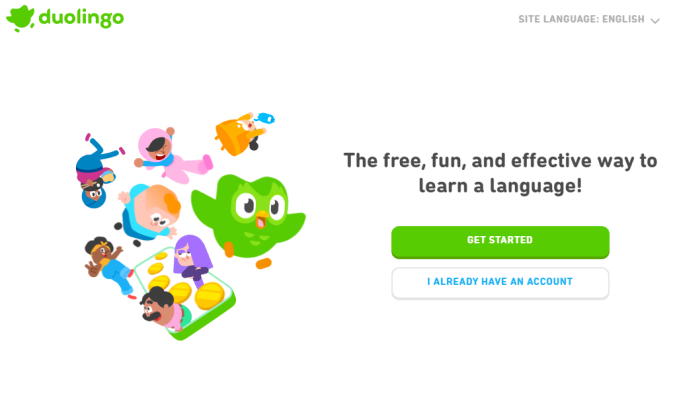
The first thing people see when they land on Duolingo’s homepage is a friendly image alongside a single sentence hero text, “The free, fun, and effective way to learn a language.”
Just below is a huge, bright green CTA button with the text “Get started,” and a more muted secondary CTA button for returning users.
This is simple, but the copywriting cuts right to the core of the three main objections people have to downloading educational apps: it’s expensive, boring, and it probably won’t work for me.
Many people try and fail to learn a new language. The copywriting here, and elsewhere on the page promises to help people keep “stay motivated” with “personalized learning” that’s “backed by science.”
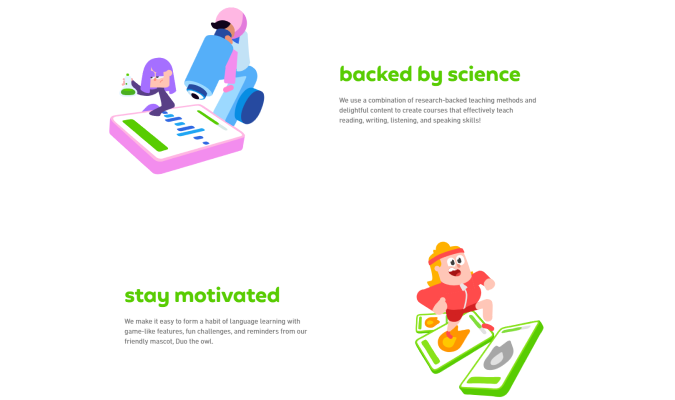
Everything is framed in the most low-risk way possible. It’s free to get started and you can “keep learning wherever you go.”
But of course learning a language is difficult. People know this. It’s going to take time and effort. “We make it easy to form a habit of language learning with game-like features,” the site says, which cleverly speaks to the work required while framing it as fun.
Why wouldn’t you sign up? Duolingo has framed the choice of signing up as one with zero downsides and a lot to gain. Clearly, millions of users are buying in.
2. Sierra: Contact form
Brand: Sierra (AI chat)
Conversion goal: New lead
Customer profile: Enterprise businesses with large-scale customer service needs
Sierra is a conversational AI platform that helps businesses deploy AI agents to automate and improve customer experience. The company hit $100M ARR in its first seven quarters and secured a $10 billion valuation.
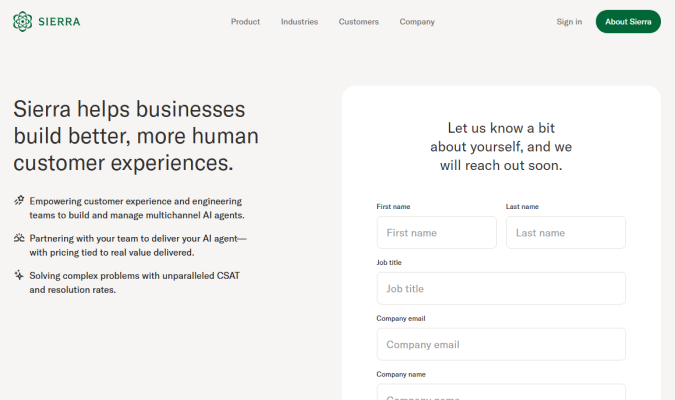
This lead generation contact form is where users on Sierra’s site land after they have clicked the “Learn more” button displayed in the navigation menu.
The headline, “Sierra helps businesses build better, more human customer experiences,” states exactly what the platform does in plain language. There’s no jargon, only a clear outcome that aligns with the brand’s target market.
It also cuts against the idea that AI automation is going to dehumanize the customer experience, which is a likely objection their buyers will have. Yes, they want to cut costs and speed up their ability to respond to customer problems, but can AI agents deliver the quality of service they require?
The three subsections of copy that follow speak to those fears, again in plain language. Their product is aimed at “empowering” your teams, “partnering” with them to deliver “unparalleled CSAT and resolution rates.”
Sierra positions itself as support rather than replacement, and keeps the focus on customer satisfaction scores and resolution rates. These are objective metrics companies can track themselves, to be sure they are really getting value from Sierra.
No buzzwords, no AI mysticism. A simple promise to help teams do a better job with what they care about most.
3. SoFi: Facebook Ad → landing page
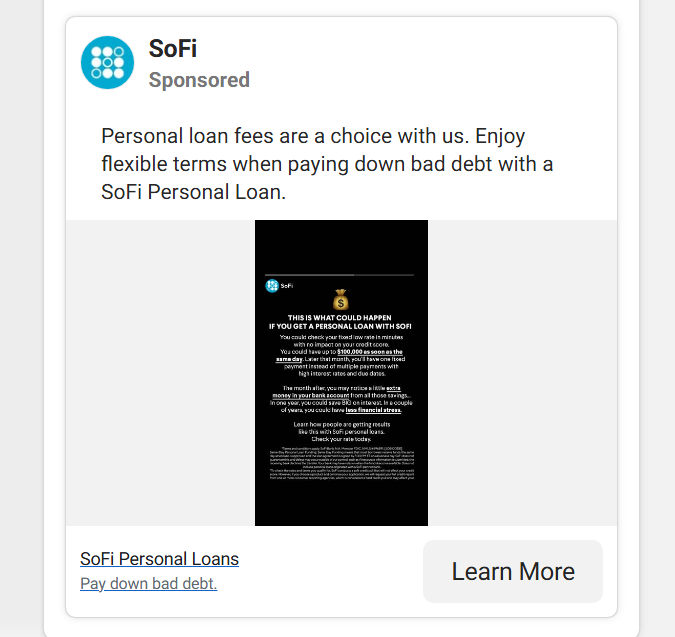
Brand: SoFi
Conversion goal: Click through to landing page
Customer profile: Younger people with steady income and credit card debt
SoFi is a fin-tech company that’s been successful enough to brand an NFL stadium. They offer a wide range of financial services, such as the personal loans advertised in this example, which target people with good credit scores that are trying to navigate high-interest credit card debt.
People with such debt often feel trapped by it, which the text of the ad speaks to immediately. “Personal loan fees are a choice with us,” it says, positioning their service as a way to regain freedom. “Enjoy flexible terms when paying down bad debt with a SoFi Personal Loan.”
Choice. Enjoy. Flexible. These are true power words in the context of debt, which can feel overwhelming to young people who have spent money on vacations, homes, weddings (theirs or friends), and are struggling to make steep payments every month.
When I discovered it on the Meta Ad Library (a truly amazing resource for any copywriter), this ad had been running for 3 months, which is a strong signal that it is convincing users to click through and visit Sofi’s landing page for personal loans.
And when you arrive on the lander, it’s perfectly aligned with the spirit of the ad.
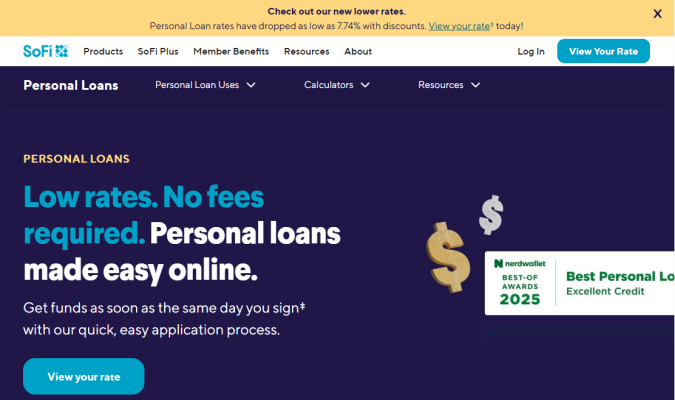
“Low rates. No fees required,” it says in the headline, “Personal loans made easy online.”
This writing decreases the perceived risk of exploring these options, and the subhead text intensifies this emotion, “Get funds as soon as the same day you sign with our quick, easy application process.”
The rest of the page builds on this simple idea. SoFi is easy to use, and it will help you save money while you get out from under any bad debt you have. There are plenty of testimonials from real customers who have found success with these products, an important form of social proof that builds trust with visitors.
The landing page call to action button, which appears at several key points on the page, says “View your rate.” It’s a no-risk offer. You don’t have to commit, but by clicking the button, you will be able to see what you could save.
4. Rhode: Product details page
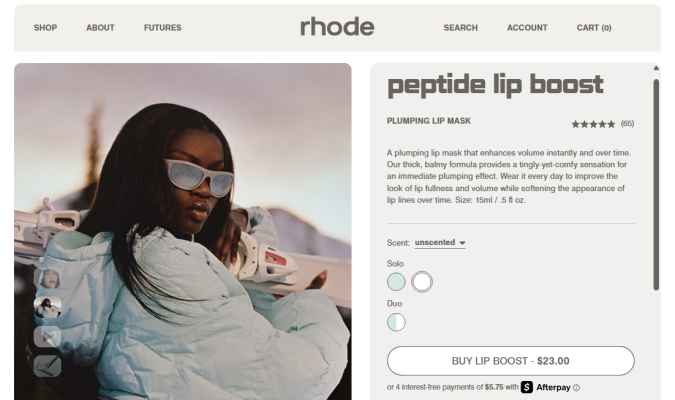
Brand: Rhode
Conversion goal: Purchase
Customer profile: Gen Z and younger millennial women who are beauty and eco-conscious
Rhode was founded in 2022 and became a billion dollar brand within three years, selling just a handful of products, many of which were under $20.
While the overnight growth can be attributed in large part to the brand’s celebrity founder, the copywriting does an excellent job connecting with its core audience of younger buyers seeking a minimalist, eco-aware buying experience.
In the example above, located on the product details page (PDP) of Rhode’s peptide lip boost, the copy promises that the product, “enhances volume instantly,” encouraging users to, “Wear it every day to improve the look of lip fullness and volume while softening the appearance of lip lines over time.”
Instant gratification plus long-term benefits. What’s not to like?
Much of the remainder of the PDP is spent showing the proof with videos and images that document the benefits of use over weeks and months.
But the language is consistently aimed at a humanistic type of buyer type that cares about the environment and wants to shop at places that feel the same way.
Rhode notes in an FYI section that their products are, “Cruelty-Free • Vegan • Gluten-Free • Dermatologist-Tested.” Elsewhere they highlight that, “Peptide Lip Boost packaging is made with post-consumer recycled (PCR) materials.”
They even include a recycling guide that enables users to ship empty products back to Rhode, free of charge.
These factors won’t matter to everyone, but to Rhode’s audience they are critical.
5. Crowdstrike: Landing page
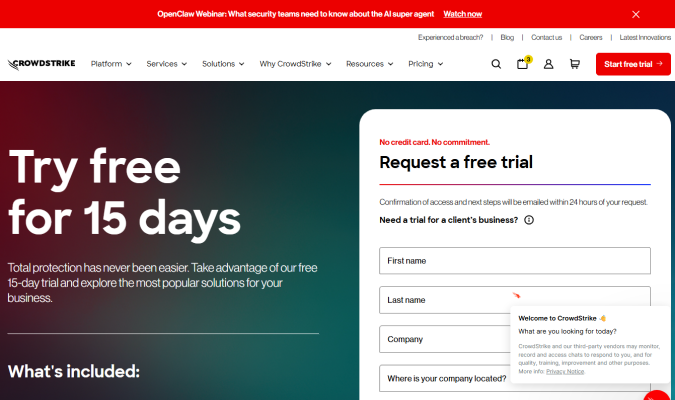
Brand: Crowdstrike
Conversion goal: Free trial request
Customer profile: Large organizations with advanced cybersecurity needs
Crowdstrike is a fast growing cybersecurity platform that’s trusted by enterprise businesses, airlines, and governments.
I found this landing page via a paid search ad for the keyword “EDR solutions,” which stands for endpoint detection and response. According to the SEO tool SEMRush, brands are paying $46.51 per click for ads triggered by this keyword.
To get their money’s worth, Crowdstrike needs a copy that moves serious buyers into a hands-on evaluation of their platform. It’s not enough to generate curiosity, they need to generate high quality leads and onboard them into a free trial.
Throughout the page, Crowdstrike maintains direct, plainspoken copywriting, using jargon only where it’s unavoidable. Decision-makers at large orgs can be counted on to understand the technical language, but the writing is focused on decreasing the risk of taking the trial. “No credit card. No commitment.”
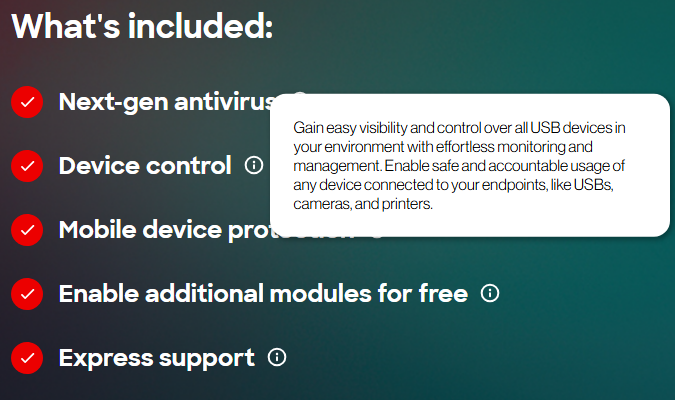
And where it gets technical, such as “Device control,” Crowdstrike spells it out in the mouseover text, clearly explaining that you’ll be enabled to monitor any endpoint like a camera, USB stick, or printer.
One thing I noticed right away was the bright red banner that read, “OpenClaw Webinar: What security teams need to know about the AI super agent.”
At the time of writing, OpenClaw’s AI agents are a hot topic, both for their potential to help companies and the risk they pose when used by hackers.
To watch the webinar, you need to sign up (which generates a lead), but even if people don’t convert there, the fact that Crowdstrike has a webinar on this topic shows that they are prepared to address the latest threats in real time. That’s a powerful trust signal.
The proof is there for those who need it, but the focus of the writing is on the ease of testing the platform, the lack of risk, and the relevance to the potential buyer’s job of keeping their organization secure.
Testing and Improving Conversion Copywriting
My favorite aspect of online marketing is that it’s so easy to track whether or not the decisions you make in your writing and page design are helping or hurting outcomes.
There’s web analytics, ad platforms, and social media management tools that enable you to track metrics like impressions, click through rates, conversion rates, and other important customer engagement metrics.
Compared to the days of TV and print advertising, it’s a walk in the park to measure how well your marketing assets are performing.
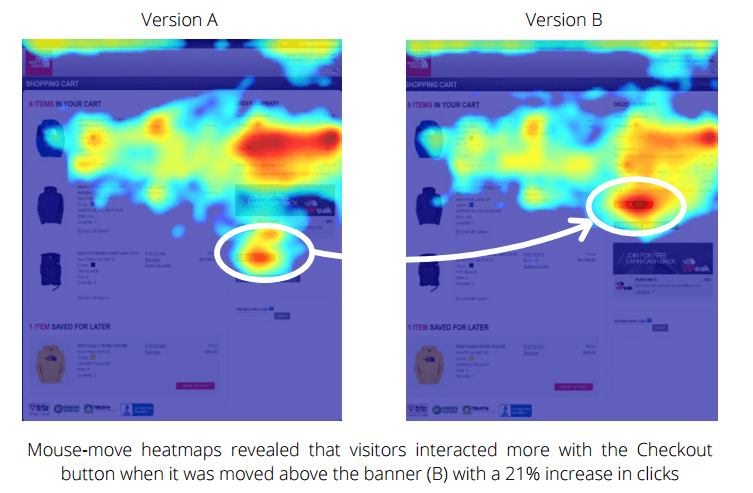
Depending on the tools you use, you may also be able to watch session recordings of users on your site or study heatmaps that show where they engaged. These behavioral analysis tools provide you with a deeper understanding of how users are interacting with your content that goes beyond clicks and conversions.
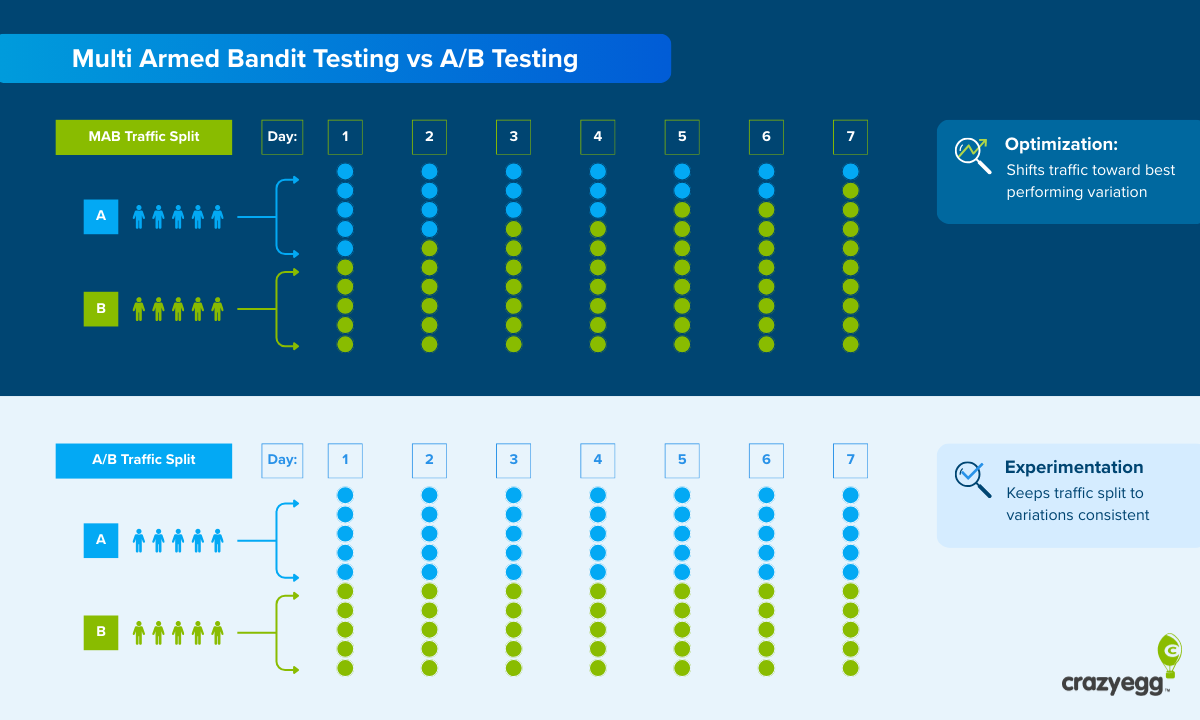
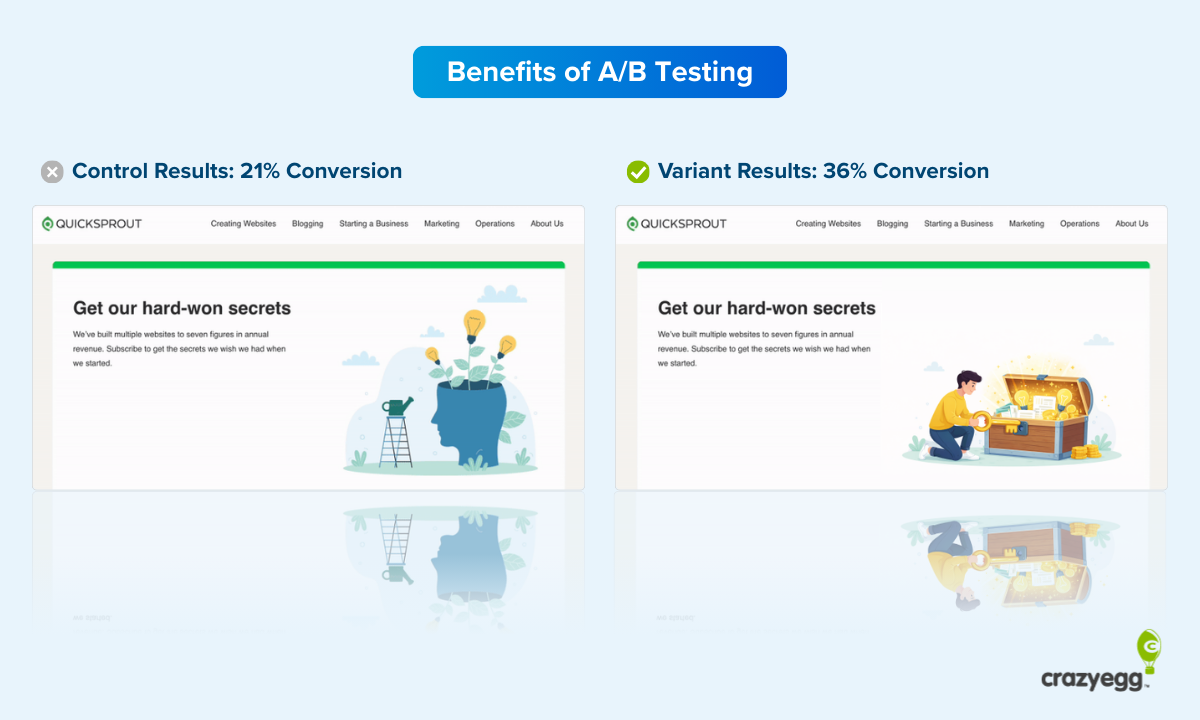
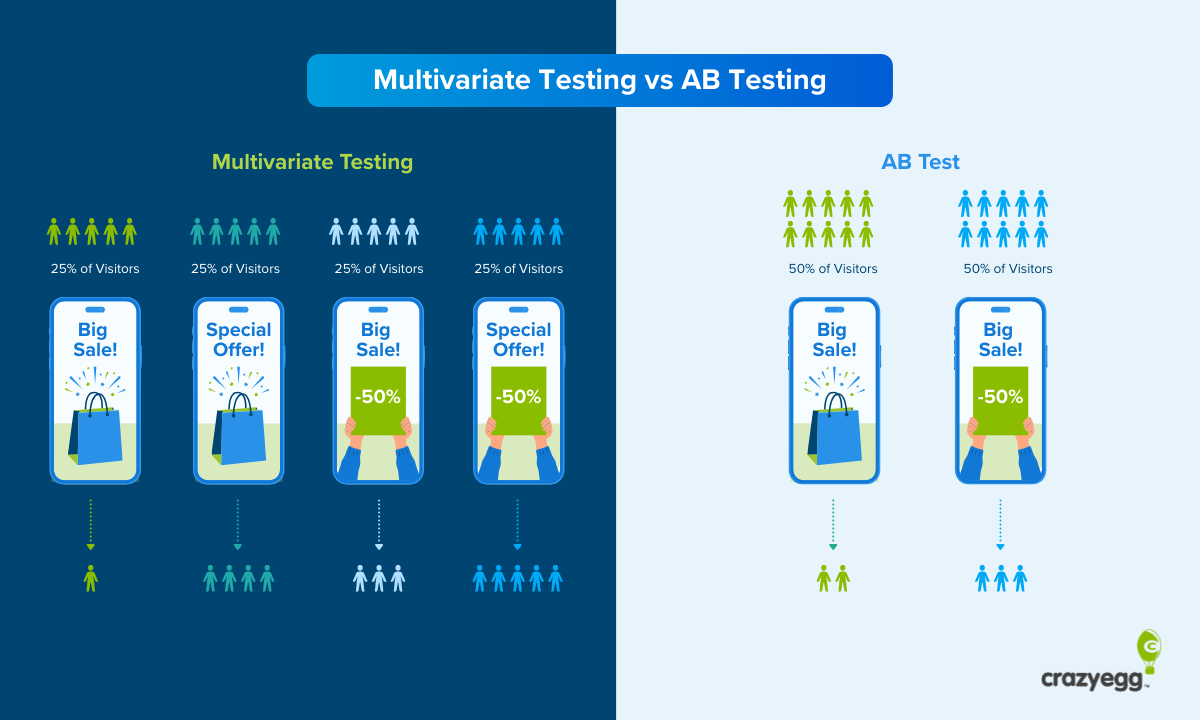
There’s also A/B testing, which allows you to run multiple versions of your site simultaneously to test different headlines, copywriting, layouts, and visuals. Try a few different headlines and see which one converts best.
So if you are interested in learning what really drives your audience to sign up and buy, there is a wealth of information waiting to be uncovered. The data comes directly from the people clicking on your ads and exploring your site.
I can’t tell you what’s going to work. Nobody can. But now you know everything you need to get started.