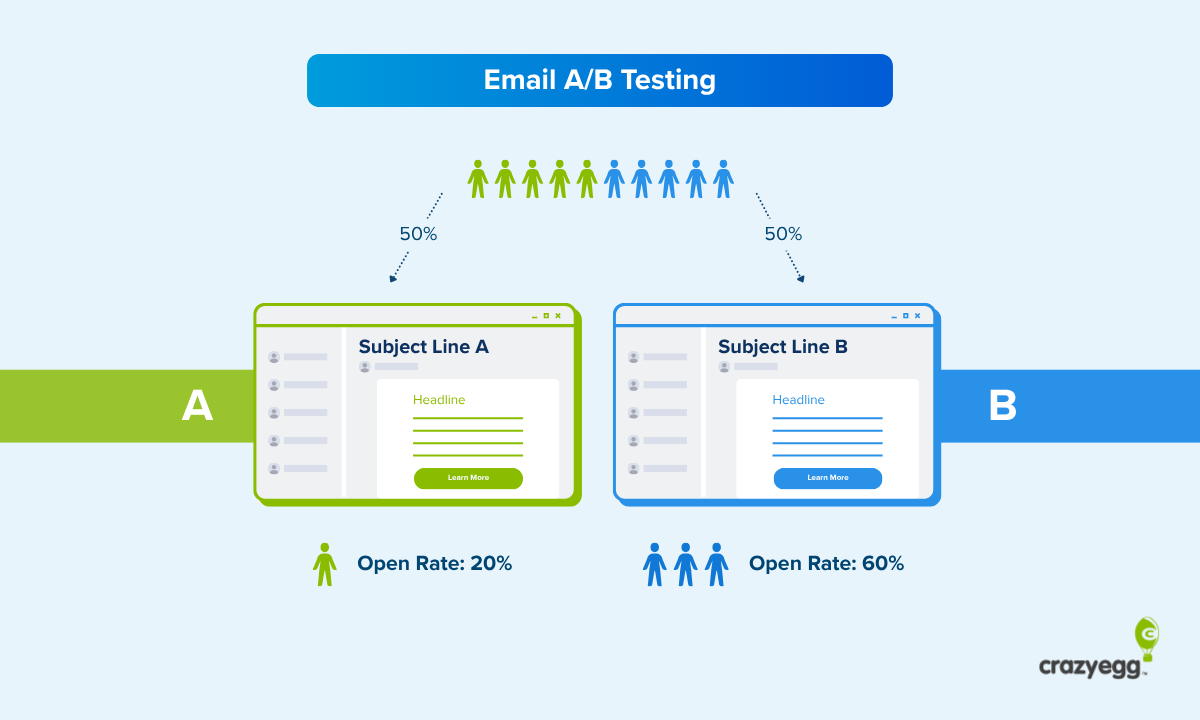
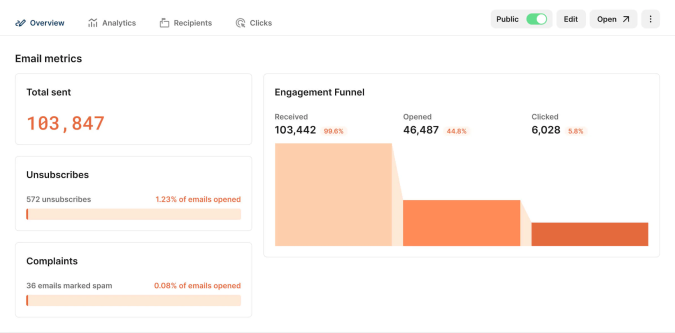
If you hope to see any results from email marketing, you need to focus on list building, or the act of collecting contact information from people in your target audience so you can start marketing to them.
But there’s so much more to list building than just, for lack of other words, building your list. You need to know how to get started, which tools to use, and which strategies will give you the most bang for your buck.
Read on to discover our guide to list building that works.
Why is List Building a Key Marketing Strategy?
Building an email list that you can market your product or service to directly is an essential digital marketing strategy that you simply cannot ignore.
Why? Let’s dig into just a few reasons list building can make an impact on your business:
- You own your email list, making it a more valuable asset than a social media following
- People on your email list are opting in to hear from your business, showing they’re already interested in what you have to offer
- The average email marketing ROI is $36-40 for every dollar you spend, making this a cost-effective strategy
- Email marketing gives you a direct line of communication to your target audience, so you want to take advantage of that
At the end of the day, it’s as simple as this: Email marketing works, and you don’t want to lose out on a strategy that has proven ROI.
So let’s start talking about the hows. How (and where) can you build your email list, and what strategies do we recommend for growing your list faster? We’ve got everything you need to know below.
How to Build Your Email List
The hard part isn’t getting started, it’s generating interest and building your list after you get started. So let’s walk through the easy part first, which is setting the groundwork so you can start building up an solid email list filled with your target customers.
1. Find the Right Email Marketing Software
If you’re going to start building an email list, you need a tool that can:
- House all of your contacts
- Help you keep them organized
- Send marketing emails to your audience
- Track email performance
While there are a number of available email marketing services to choose from, let’s dig into five popular options and what they have to offer. Choosing the right email marketing software and creating your account is step one in creating the ecosystem needed for building an email list.
Mailchimp
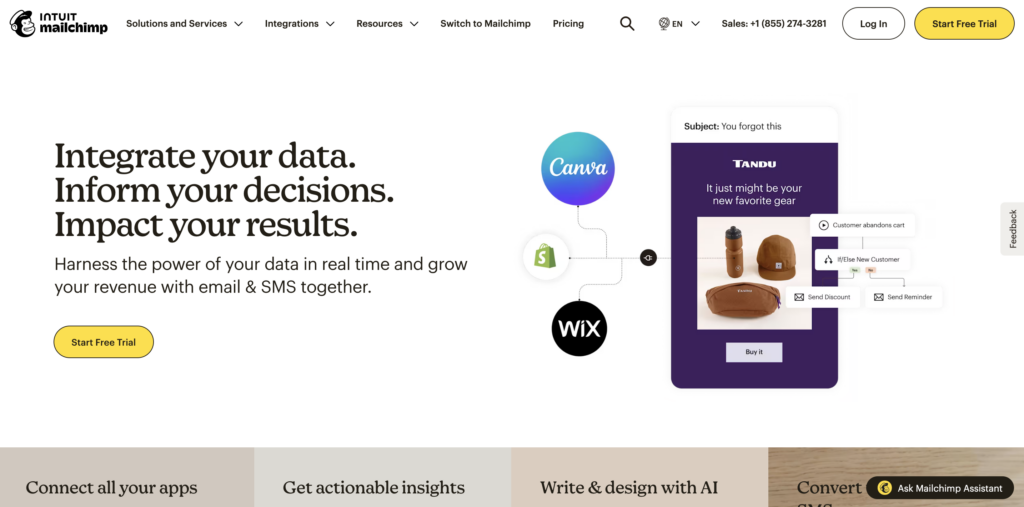
Mailchimp is a great platform for brands and professionals just starting out with building their email list. It’s completely free for your first 500 subscribers, giving you a reprieve from paying for a software until you actually have enough people to send content to.
Some of its key list building features include:
- Embeddable signup forms
- Integrations to help you promote your list cross-platform
- Customizable popups
- A branded website for promoting your newsletter
beehiiv
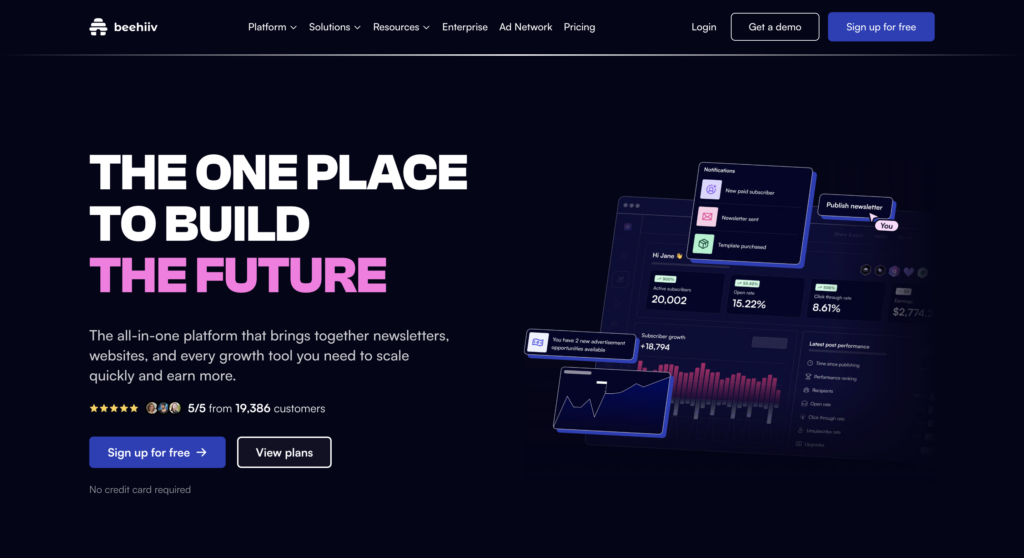
beehiiv is a newsletter site ideal for professionals and creators looking to start and monetize a newsletter. However, it can also be a great platform for creators and brands alike to build up their email list. beehiiv is free for up to 2,500 subscribers, making it an even better option than Mailchimp for those just starting out with list building.
Some of their features include:
- Email capture forms and popups
- Website builder for promoting
- A recommendation network to help people find your newsletter
Substack
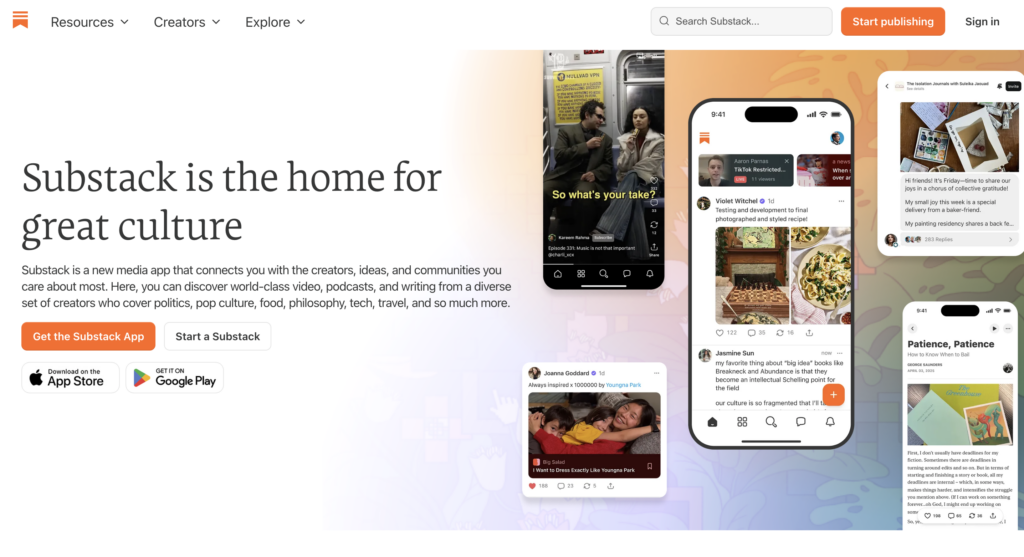
Substack allows professionals and creators to start up their own publication as well as a newsletter and monetize it. But brands can also take advantage of this platform as a unique way of sharing educational content. With Substack, it’s completely free to start your subscription—but if you choose to monetize your content, the platform keeps 10% of everything you earn.
Features to grow your list include:
- Discovery page so people can find interesting content (Substack itself claims that 50% of all subscriptions happen within the app)
- Cross-posting tools for creators to reach new audiences
- Subscriber referrals for rewarding people who recommend your newsletter
Kit
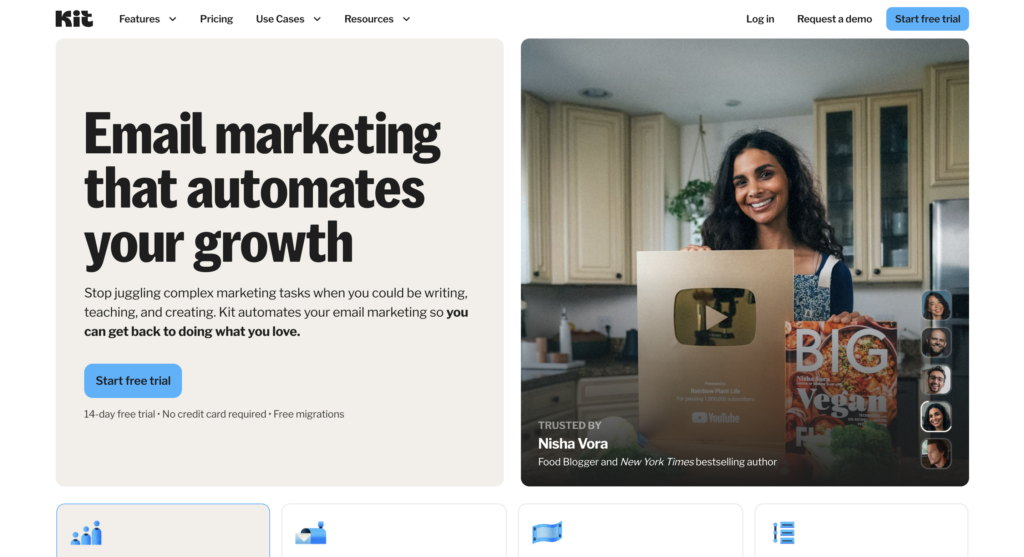
Kit is an email marketing platform that puts a heavy emphasis on automation, making this a great option for brands who want to create automated marketing campaigns and easily segment out their audience into different categories. It’s completely free for up to 10,000 subscribers (with limitations like only one automated sequence), but this gives brands an affordable way to start building their list.
Useful features include:
- Landing pages for promoting your newsletter
- Opt-in forms to generate new subscribers
- A newsletter feed and website so you can build interest in your past content
ActiveCampaign
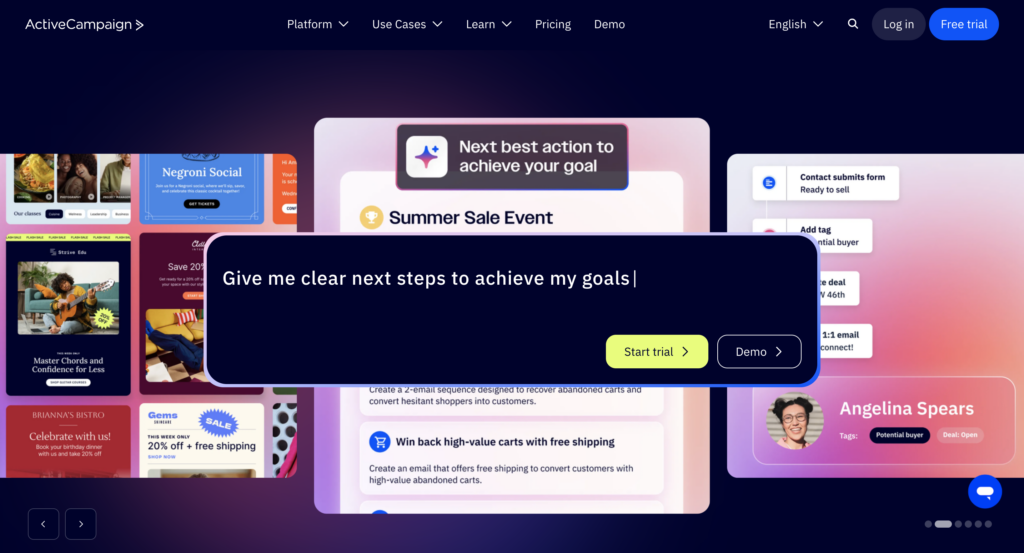
ActiveCampaign also provides features perfect for helping businesses start building up an email list, sending marketing content, and creating automated sequences. ActiveCampaign doesn’t offer a free option, so this might be a better option once you’ve already got a start to your email list.
List building features include:
- Embeddable signup forms
- Landing pages for promoting your newsletter
2. Generate Signup Forms
Now that you’ve picked the tool you want to use to host your email list and send your marketing communication, it’s time to start promoting your list. And the best way to start with this is by using the built-in signup forms your email tool lets you create.
There are a few different options here:
- Create a signup form that you can embed on your website or blog
- Create a signup form you can add to a popup on your website
- Create a standalone landing page with a signup form for your newsletter
Each of the aforementioned email tools gives you the ability to do each of these. You can start with one single form as you organize your new email strategy, or you can create all three and start to scale right off the bat.
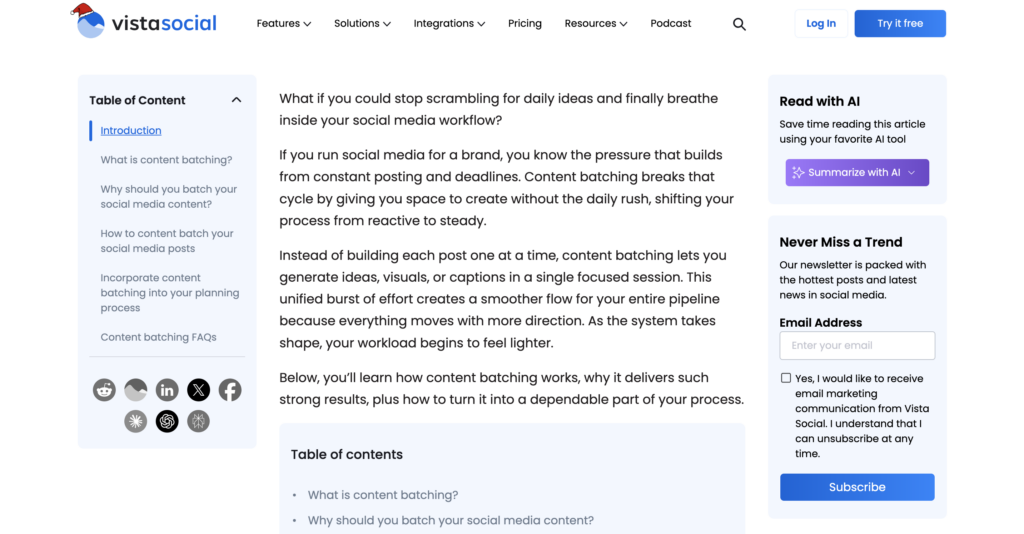
To really attract attention with your email signup forms, you’ll want to include a call-to-action that gives potential subscribers a reason to subscribe. This can be as simple as the name of the weekly newsletter you plan to send, or you might choose to include a description of the types of content you’ll be sharing. Here’s a simple example of what this could look like from the Vista Social blog below:
Or you could create a large call-out on your website or blog like Visme did here:
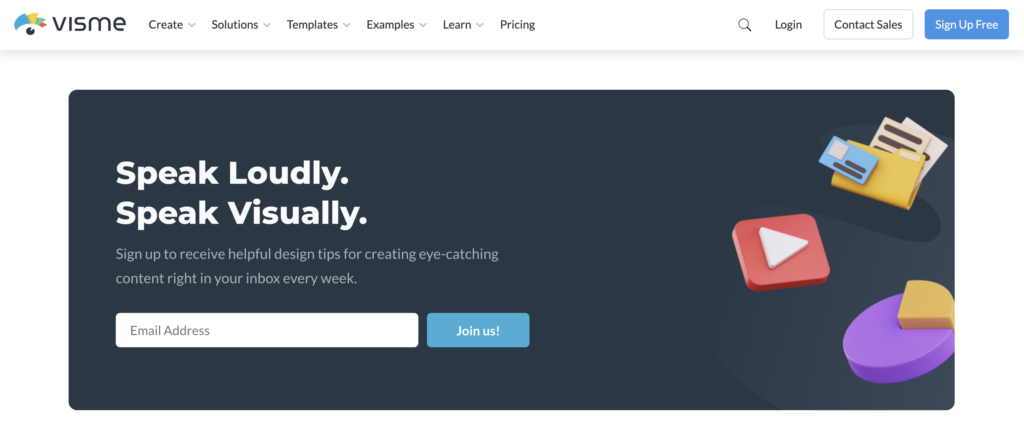
3. Get Strategic About List Building
Once you’ve created your first (or a few) signup form for your email list, it’s time to get strategic about growing that list. Having a sizeable email list means you have even more potential customers to convert (or existing customers to retain).
In the next section, we’re going to dig into some creative list building strategies you can take advantage of to start exponentially growing your email list.
8 Creative List Building Strategies
Want to start building up your list so you have a large audience full of potential customers you can convert? These eight strategies can help you maximize your list building efforts.
1. Create Lead Magnets
You can’t expect people to hand over their email address for little to nothing in return. So one great way to start building your list—especially for B2B brands—is by creating a lead magnet or a tripwire.
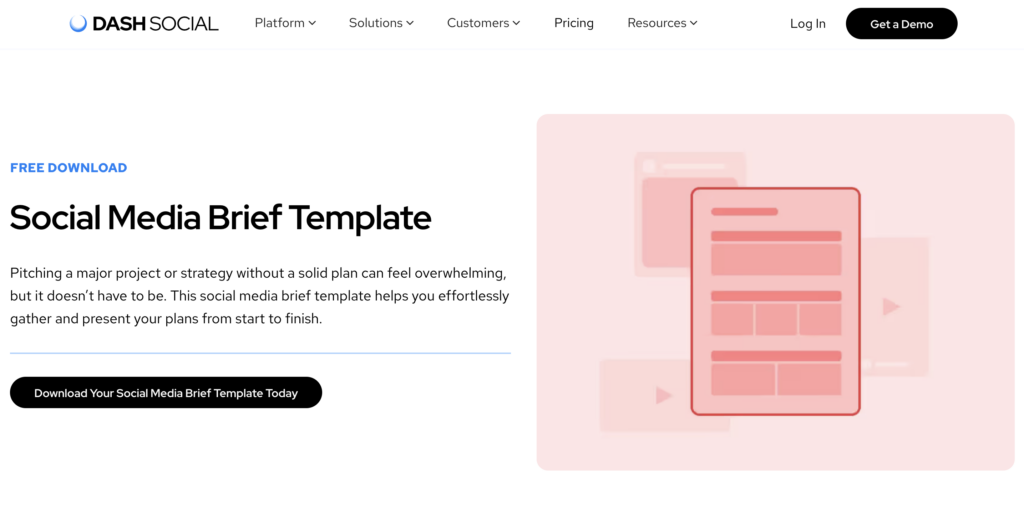
A lead magnet is some kind of valuable resource, like an ebook, guide, checklist, or report, that you can offer to your target audience in exchange for their email address. Let’s take a look at an example so you can see what we’re talking about. Dash Social shares templates with its audience, like this social media brief template, that interested users can download. But they have to provide their email address and consent to receiving marketing communication first.
A few things to keep in mind with this tactic:
- Your lead magnet needs to be something relating to your business/industry that your specific target audience would be interested in
- You can create dozens of different lead magnets with the intent to build your list—Dash Social has 15+ templates, along with other types of lead magnets to maximize their efforts
- You should test different ideas to see what topics or types of lead magnets generate the best results, then make more of those
You can even include lead magnets like this within blog posts as an extra piece of content. This makes your blog even more valuable and turns it into a lead generation machine.
2. Send a Valuable Newsletter
If you’re starting to build a list, you need to make a plan for how to market to that list. And one great way to do that is by creating a weekly newsletter that your audience actually wants to read.
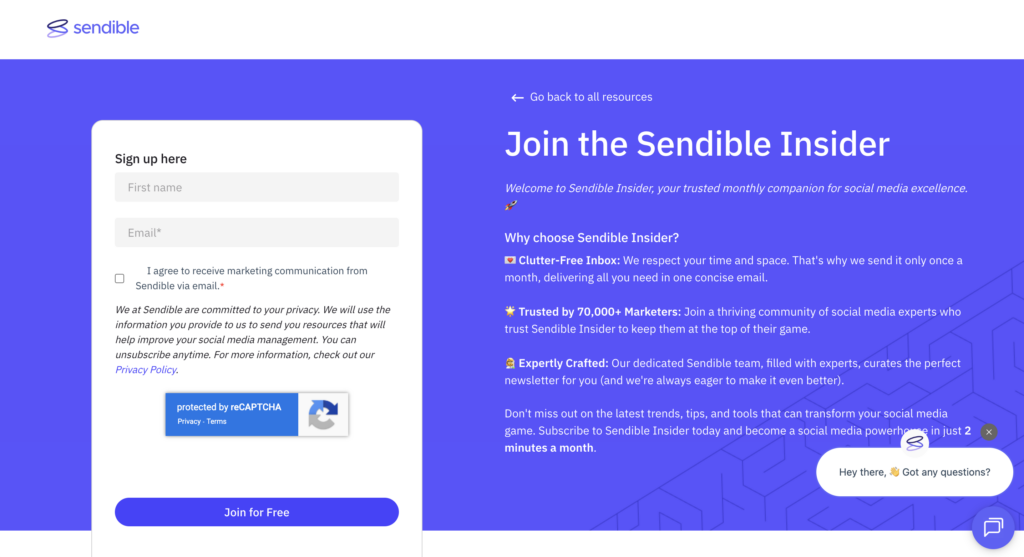
Not only does this keep your subscribers engaged, but it also gives you another incentive for bringing in even more leads. Sendible does just this with its Insider Newsletter. Because people are interested in what the brand and its team has to say, Sendible is able to simply use its newsletter as a marketing tool for its email list.
Consider what kind of newsletter your brand can send that will be so valuable people will want to subscribe, open, and read it week after week.
3. Place Signup Forms All Over Your Website
Make it as easy as possible to sign up for your email list. And one way to do that is by placing signup forms all over your website. Take a page out of The Sill’s book. First, a popup with a signup form appears when someone first lands on the ecommerce brand’s website.
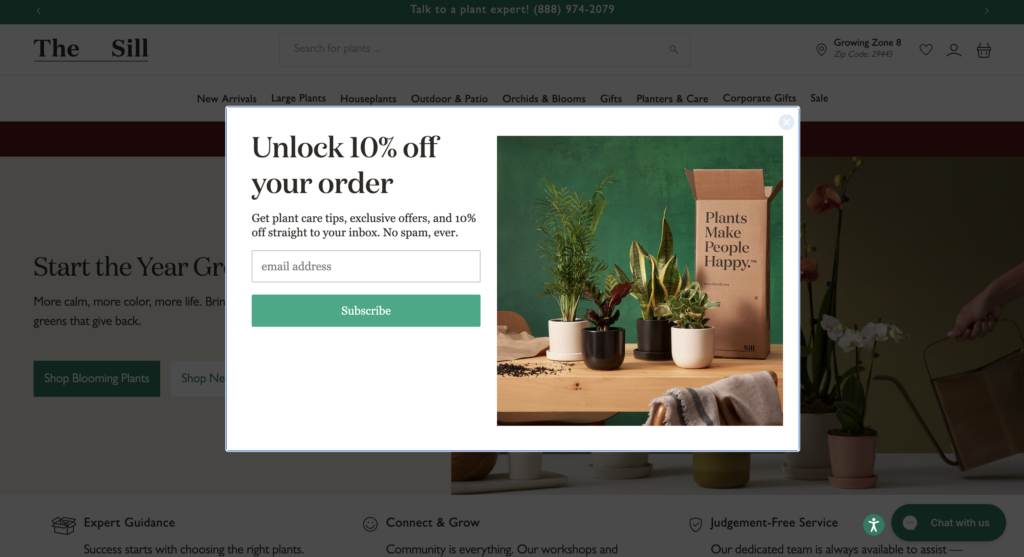
But The Sill has also placed a signup form in their website footer, meaning it sits at the bottom of every single page on its website, making it as easy as possible for interested customers to sign up and keep getting information about the company’s products and sales.

Not sure where to place signup forms on your site? Some ideas include:
- Your home page
- Your blog/resources page
- Your product pages
- On individual blog posts
4. Promote on Social Media
Use your social media platforms as a tool as well. Share the link to your newsletter across platforms like LinkedIn, Facebook, X/Twitter, and Threads. You can even use visual platforms like Instagram to promote your newsletter like Lissy Skincare did below. Set up a DM automation to make it easy for commenters to receive the signup link.
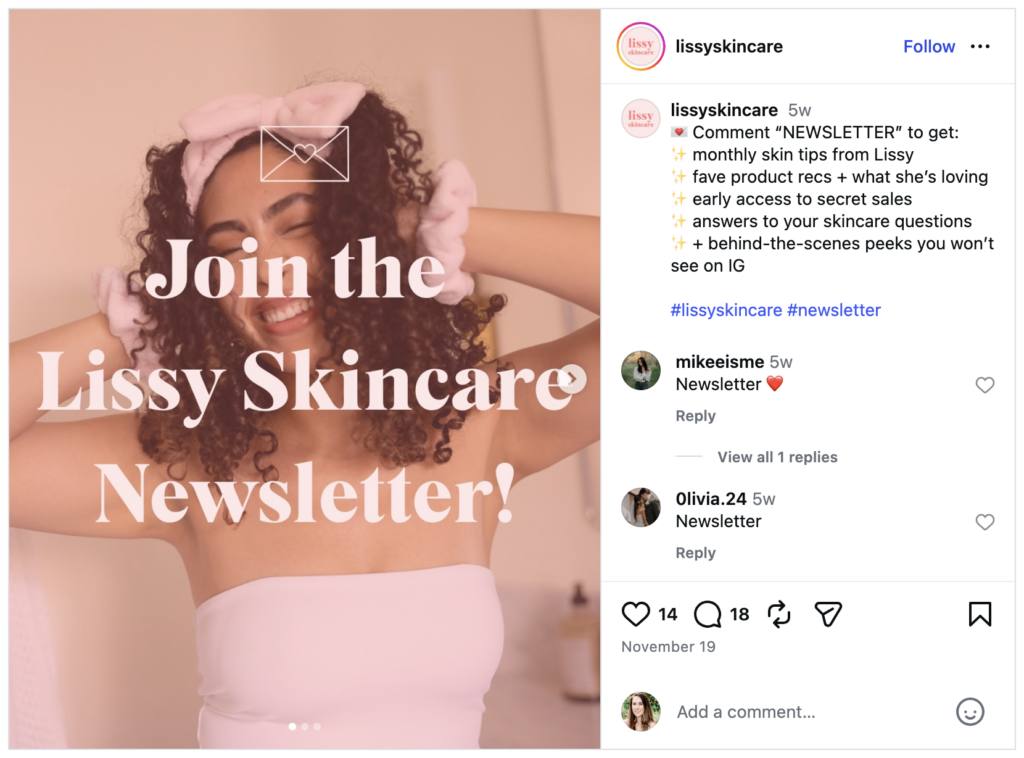
If you’re already trying to fill up your social media content calendar, regularly including CTAs to your newsletter is a great idea.
5. Use Eye-Catching CTAs
Make your signup forms stand out so they grab attention and generate even more leads. For example, Webflow has placed a full-width signup form on its blog page, making it difficult to miss. Not only that, but the background slowly moves, helping to grab attention even more.
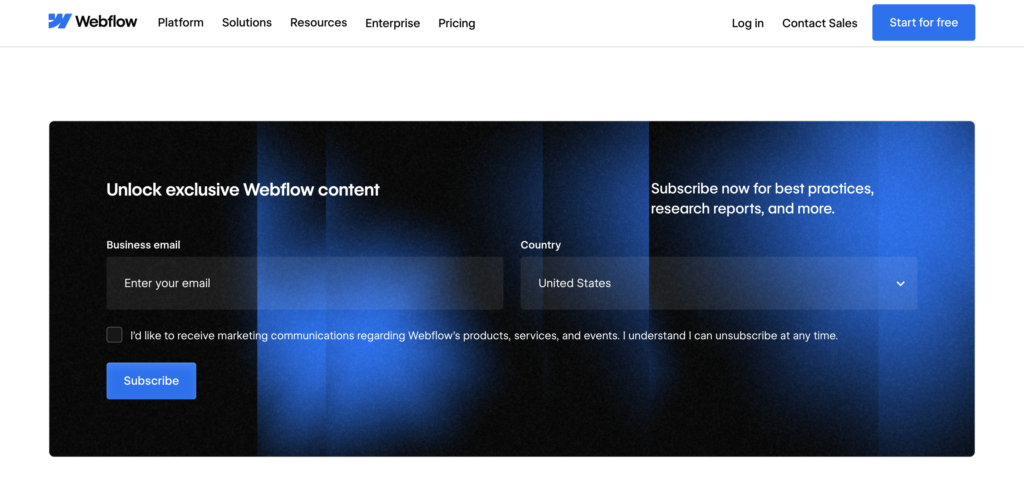
To help your CTAs stand out, you can:
- Make them full width like Webflow did
- Use bright colors to help it pop off the page
- Incorporate visually appealing design elements
- Add a big, bold heading explaining what the form is for
6. Create a Dedicated Landing Page
Deploying signup forms all over your website is a solid strategy. But if you create a dedicated landing page, you also now have a link you can share across your website, social media platforms, and more that leads people straight to information about your newsletter. Here’s a great example from Teachable promoting its newsletter/podcast combo. The landing page promotes the concept of its newsletter, explains its purpose, introduces voices readers will hear from, and more.
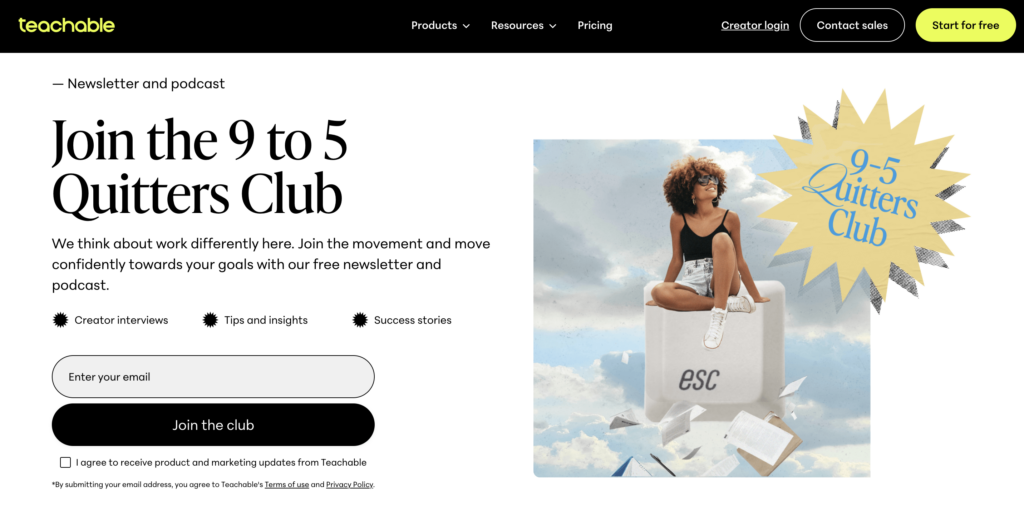
Creating a dedicated landing page gives you the space to properly promote your newsletter. Share snippets of content you’ve sent out to your list, include testimonials from loyal subscribers, incorporate CTAs throughout, and more.
7. Provide Incentives
Sometimes a lead magnet doesn’t make sense for your business, so you need other incentives to get people in the door and on your email list. Discount codes or freebies are the perfect way to do this.Look at this example from The Day Designer, offering 15% off to email subscribers:
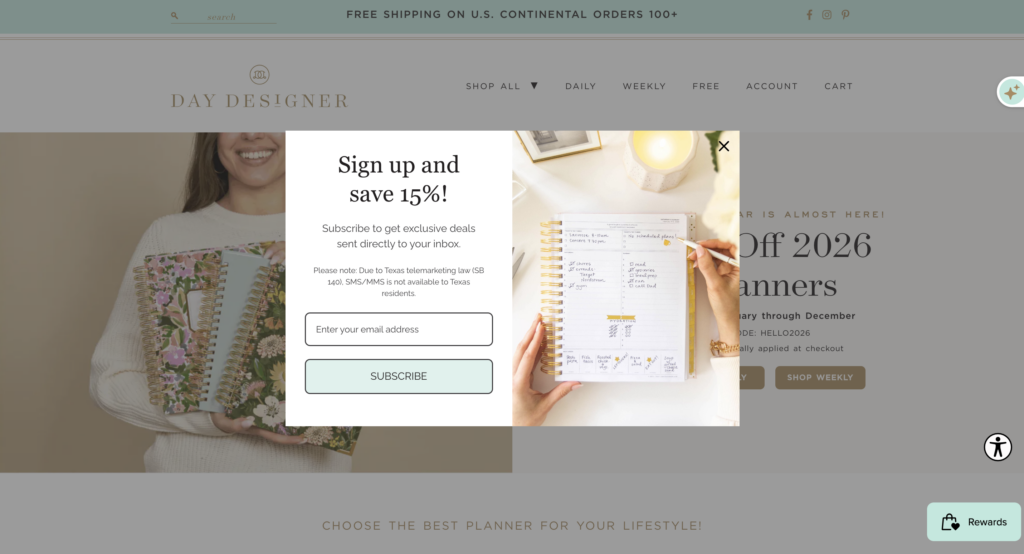
Come up with an incentive that makes sense for your product or service offerings, and consider testing a few different options to see which one works best for your potential customers.
8. Test Website Popups
Website popups can also be a great way to grab attention and increase your email list size. There are a few different types of popups you can use:
- Popups that appear when someone first appears on your website
- Popups that appear when someone attempts to leave your website
- Slide-ins that appear in the corner of your website
- Floating bars at the top of your website
ConvertFlow used the second type, which is also called an “exit-intent” popup on its website.
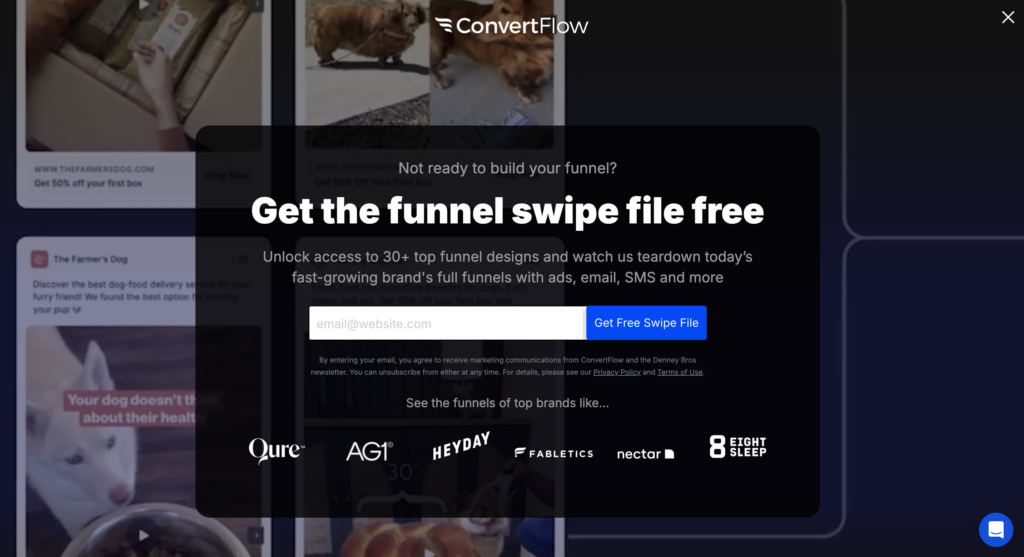
When users move their mouse towards the edge of the screen, potentially to click the “X” or the “Back” button, this full-screen popup appears offering a lead magnet. It’s a great way to grab attention and make one last-ditch effort to generate a lead before a user leaves your website.