A value proposition is a short statement of why your target customer should choose your product or service. It names what you deliver, who it’s for, and the reason it beats the other options your customer is weighing.
To create a value proposition, you define your target customer, map what they’re trying to get done, turn your features into benefits and align them with their specific needs, identify differentiation angles, draft several versions with a template, and test it.
The article explains how a value proposition differs from a USP, mission statement, or tagline, what its building blocks are, and how to put them together. You will also see how to communicate your value proposition on your website and see real value proposition examples from B2B and B2C companies.
What Is a Value Proposition?
A value proposition is a concise statement that defines the value a product or service delivers to a specific customer segment. Or, in other words, what problems you solve, who you solve them for, and often, why customers should choose your solutions over competitors’ offerings.
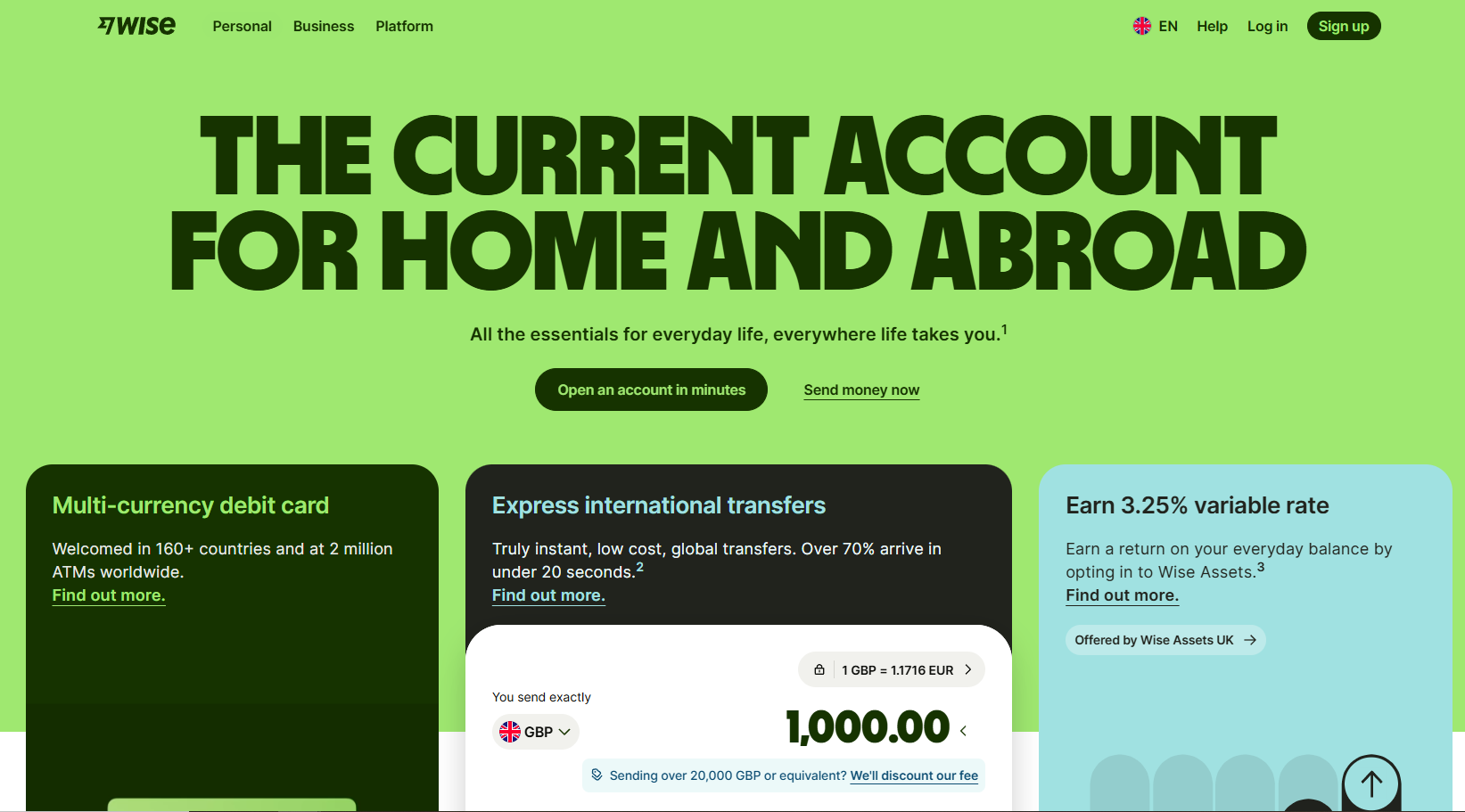
For example, Wise offers a bank account for people who move money between countries and spend in different currencies, with transfers that arrive in seconds and cost up to 75% less than banks charge.
Value proposition vs. unique selling proposition (USP)
Value proposition focuses on the value the customer receives — the benefits it offers and pain points it addresses.
Unique selling proposition (USP) focuses on what makes a product or service different. It highlights the one thing that sets the offering apart from competitors.
In practice, the value proposition also covers uniqueness.
For example, a freelance writer’s UVP may read “I help B2B SaaS companies drive pipeline with high-converting blog content (value), without multi-week onboarding and long-term agency retainers” (uniqueness).
This is sometimes called a unique value proposition (UVP).
Value proposition vs. mission statement
While the value proposition explains specific, practical outcomes you already deliver, the mission statement is aspirational and focuses on the broader business purpose.
In other words, a value proposition is the customer’s “why” (what they get and why it beats the alternatives), and a mission statement is the company’s own “why” (the purpose that guides its decisions).
Successful businesses have the two aligned: their mission statements guide their value propositions.
Value proposition vs. tagline vs. slogan
Taglines and slogans are memory devices that help consumers remember the brand, product, or marketing campaign.
A tagline conveys the idea the brand stands for, and companies usually use the same one for years, while a slogan is tied to a specific product or campaign, so a company can run several at once, or dozens over the years.
Both communicate the value proposition and the company mission statement.
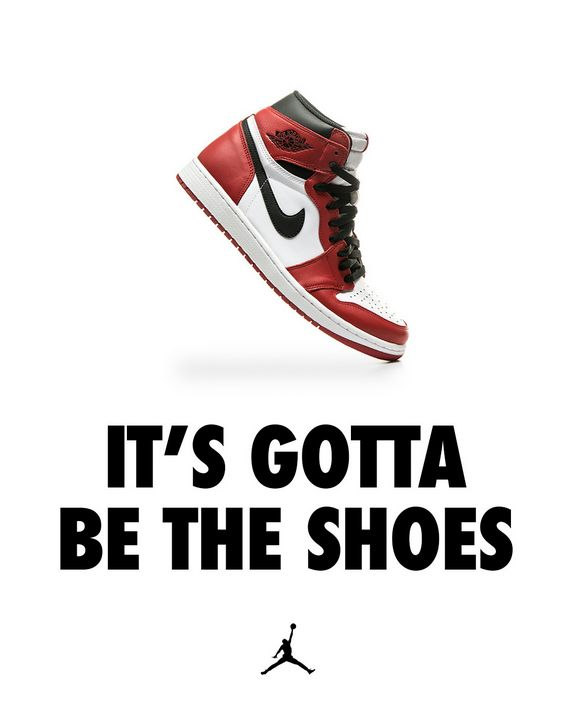
For example, Nike’s tagline “Just Do It” has been around since 1988 and conveys messages that align with the company’s core values, such as personal empowerment.
And its 1989 “It’s Gotta Be The Shoes” campaign promoting the Air Jordan line, which retired when the campaign finished, aligns with the company’s value proposition: we build sports gear built with innovative materials and engineering that improves performance.
The Elements of a Strong Value Proposition
The value proposition canvas, a popular tool, breaks down the value proposition into a customer profile (customer jobs, pains, gains) and the value map (product or service, pain relievers, and gain creators).
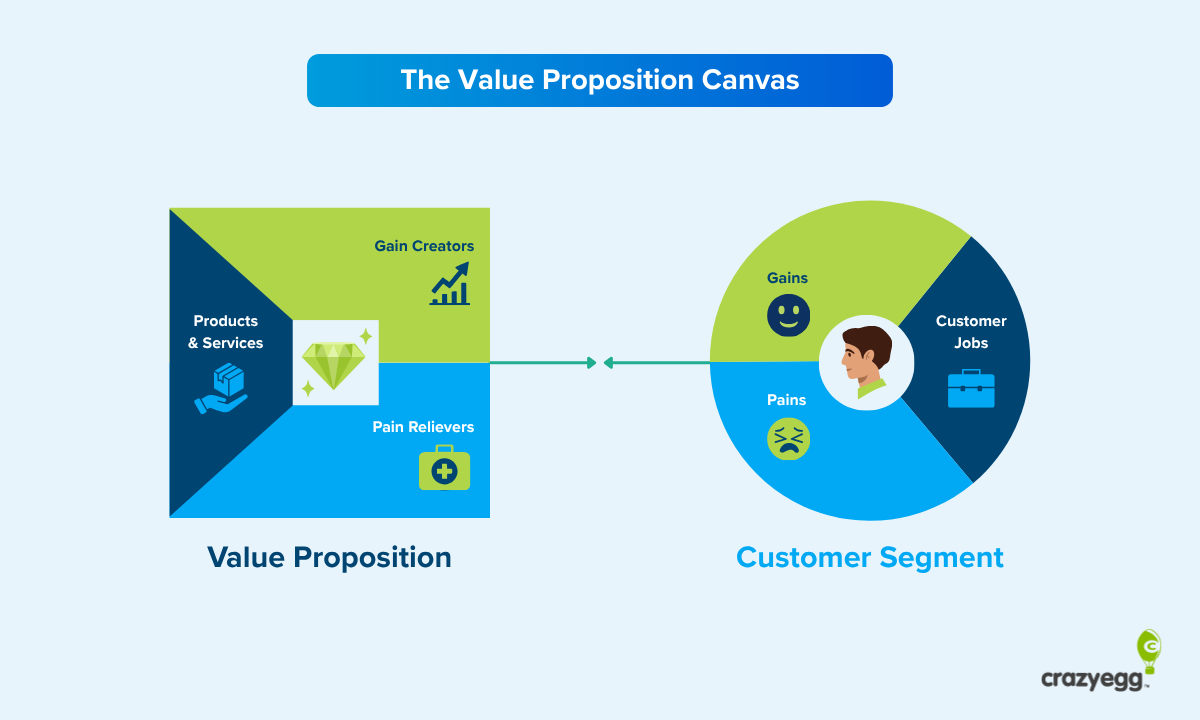
Essentially, a value proposition answers four questions:
- Who is this for, and what are they trying to get done? Every customer uses a product to achieve a specific outcome. For example, a freelancer needs accounting software to issue invoices, keep track of business expenses, and file tax returns.
- What’s standing in their way? The frustrations, risks, and obstacles between your customer and that job. For example, reconciling expenses against the bank statement manually is a proper pain in the neck.
- What are they hoping to gain? What do they require, expect, and desire, and what would exceed their expectations and genuinely delight them? Like, less time spent on bookkeeping.
- What do you offer that addresses those pains and delivers those gains? Your products and services, matched specifically to the problem and the outcome. For example, a mobile app that scans and logs receipts, so you don’t have to enter them manually.
Many value propositions also differentiate the product or service from competing offerings.
Why Do You Need a Strong Value Proposition?
A strong value proposition helps companies grow in multiple ways:
- It helps you differentiate products and services from competitors. Vital especially in crowded markets.
- It builds customer trust by demonstrating you understand their pain points and goals.
- It speeds up the sales cycle by helping salespeople explain the product’s or service’s unique value quickly and effectively,
- It improves internal alignment by giving teams the same goal to work towards; it informs brand messaging and keeps it consistent.
- It helps secure funding by demonstrating to investors you understand the market and customer needs.
How to Write a Great Value Proposition in 6 Steps
Here’s how to craft a compelling value proposition for your product or service.
1. Define your target customer and competitors
When describing your target customer, name their role, company size, and situation.
For example, “a freelance content writer using spreadsheets to keep track of their sales and expenses”, or “Enterprise RevOps team at B2B SaaS company responsible for pipeline forecasting accuracy.”
A detailed definition makes it easier to zero in on their jobs-to-be-done, problems, and benefits.
Next, list all the existing solutions. For example, manual processes, competing products your customers considered, or tools built in-house.
When studying competitors, pay attention to their value propositions and positioning, customer problems they address, what makes their messaging effective, and gaps you could exploit.
2. Identify customer jobs, pains, and gains
Study what customers say about their tasks and how to add value.
- Interview 5-6 real customers about what they were trying to do before they found you and why they chose you.
- Chat with the sales team about the challenges and reservations their customer bring up.
- Check how they describe their problems in recent support tickets.
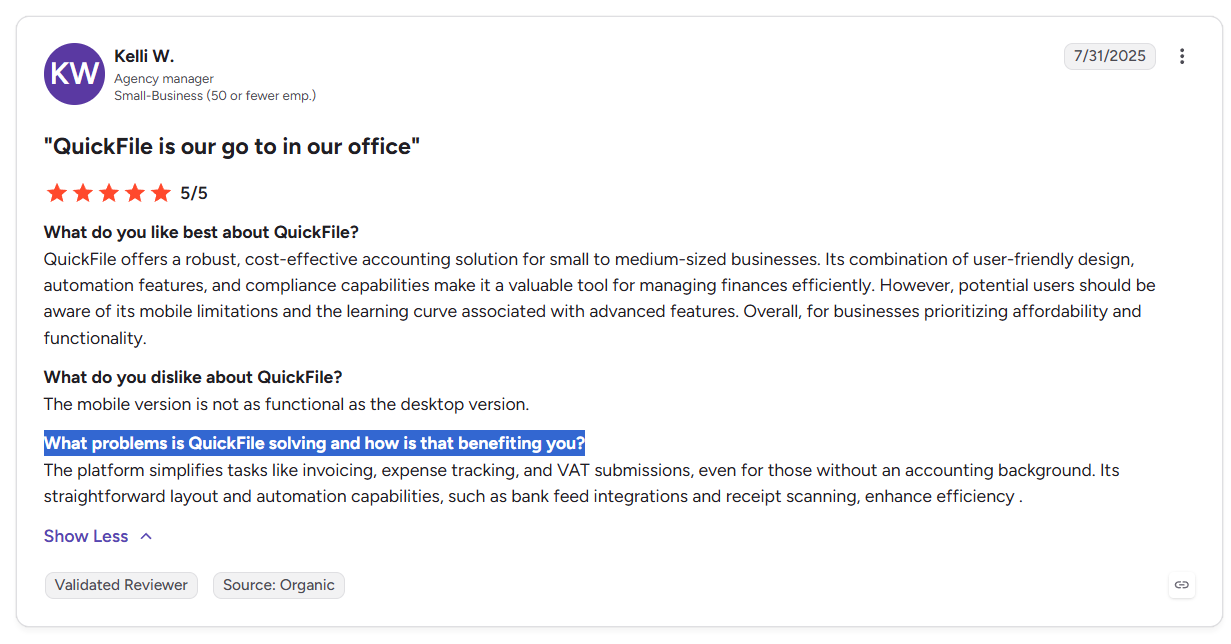
- Study customer reviews of competing products to understand what pain points and benefits they mention.
Write down the language customers use to talk about their pains, needs, expectations, and desires verbatim.
3. Map features & benefits with the “so what?” test
List everything your product or service does. Take one feature, ask “so what?”, and write the answer.
For example, the accounting software allows you to connect your bank feed. So what? The freelancer doesn’t have to record sales and expenses manually. So what? They never miss transactions and finish quarterly returns in an hour instead of four.
So the outcomes are: accurate returns and no risk of fines, and less time spent on bookkeeping, so more time for billable work.
The “so what?” test lets you see how features align with customer needs and problems.
4. Look for a differentiation angle
Once you know how exactly you can help your target customers, look for differentiators.
Start with features and their benefits. If competitors offer the same capabilities, look at other levers:
- Customer experience and support (more responsive, understanding customers better)
- Quality, reliability and durability (can be trusted to do the job and lasts longer)
- Pricing (better value for money)
- Distribution, delivery and implementation (easier and quicker to find, purchase and start using)
- Brand story and values (e.g., an ethical position customers can rally behind)
- Specialization (focus on a narrower segment)
- Partnerships (integrations or collaborations with related businesses)
5. Draft multiple versions of the value proposition using a formula
Use a value proposition formula to write 5-10 rough drafts.
Teams use value proposition templates created by:
- Steve Blank: “We help [target customer] do [outcome] by doing [how you deliver it].”
- Geoff Moore: “For [target customer] who [need or opportunity], [product] is a [category] that [key benefit]. Unlike [primary alternative], [product] [differentiation].”
- Harvard Business School (Answers four questions: What is the brand selling? What job does the customer need done? What competing companies or products are there? What sets the brand apart from them?)
Which formula you use determines how long the value proposition is. Aim for 1-3 sentences.
6. Test your value proposition
To validate your value proposition, use:
- Customer interviews. Ask a handful of real or prospective customers to read the statement and explain it back in their own words. Tells you whether the language actually lands with the people it’s written for.
- 5-second test. Show the draft to someone for five seconds, then ask what the company does, who it’s for, and what the main benefit is. Reveals whether the statement is easy to understand.
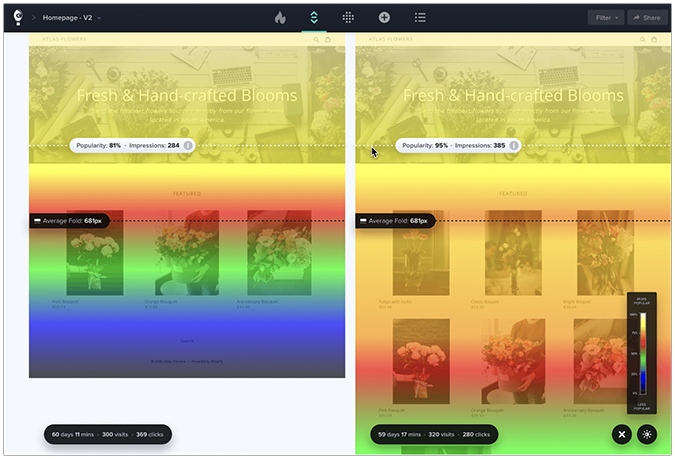
- Heatmaps and session recordings. Study whether website visitors pay attention to the headline and other elements that communicate the value proposition and for how long.
- A/B testing. Run two versions of the headline, subheadline, hero, differentiation sections, etc. against each other and measure bounce rates, time on page, click-through rates, and conversion rates to pick the version that resonates better.
Three Effective Value Proposition Examples
Now that we have the principles and the process covered, let’s have a look at three examples of value propositions.
Gusto: “Payroll, HR, Benefits. Simplified”
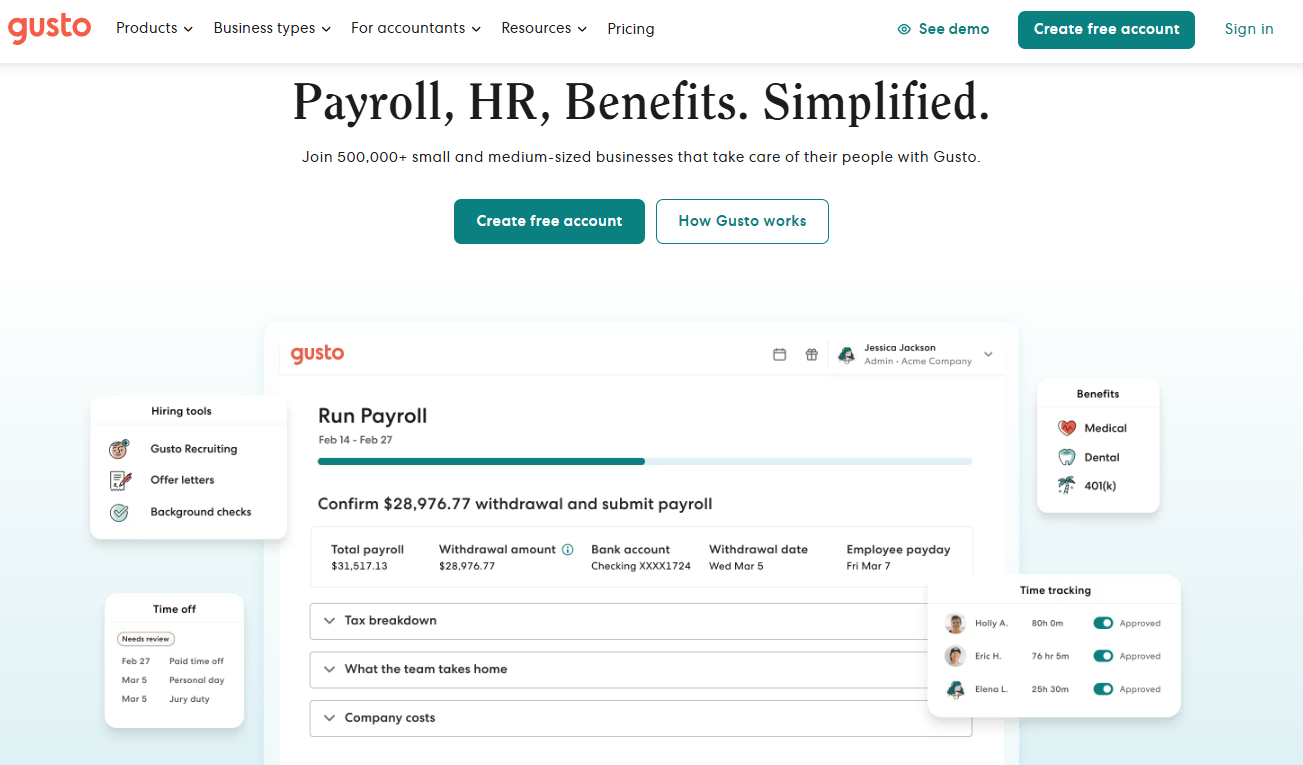
- What jobs it does: Payroll, hiring, and employee benefits management.
- Who it’s for: Small and medium-sized companies (“Join 500,000+ Small and medium-sized businesses.”)
- What pains it solves: Time-consuming, complex payroll. Risk of errors leading to fines.
- What gains it delivers: Gusto promises time back (“Payroll used to take at least one full day…now… takes us less than an hour each month”), found money (“identify tax credits to help save you money you may never have known you qualified for.”), better hires and efficient onboarding (“Hire standout candidates and get them up to speed faster than ever.”) and affordable benefits (“Make a real difference with affordable employee benefits.”
- How it differentiates: The platform positions itself as simpler and cheaper than the legacy providers. Its FAQ stakes both claims: “one of the most affordable” and “consistently rated as one of the most user-friendly payroll platforms on the market.”
2. DuckDuckGo: “Switch to DuckDuckGo. It’s private and free!”
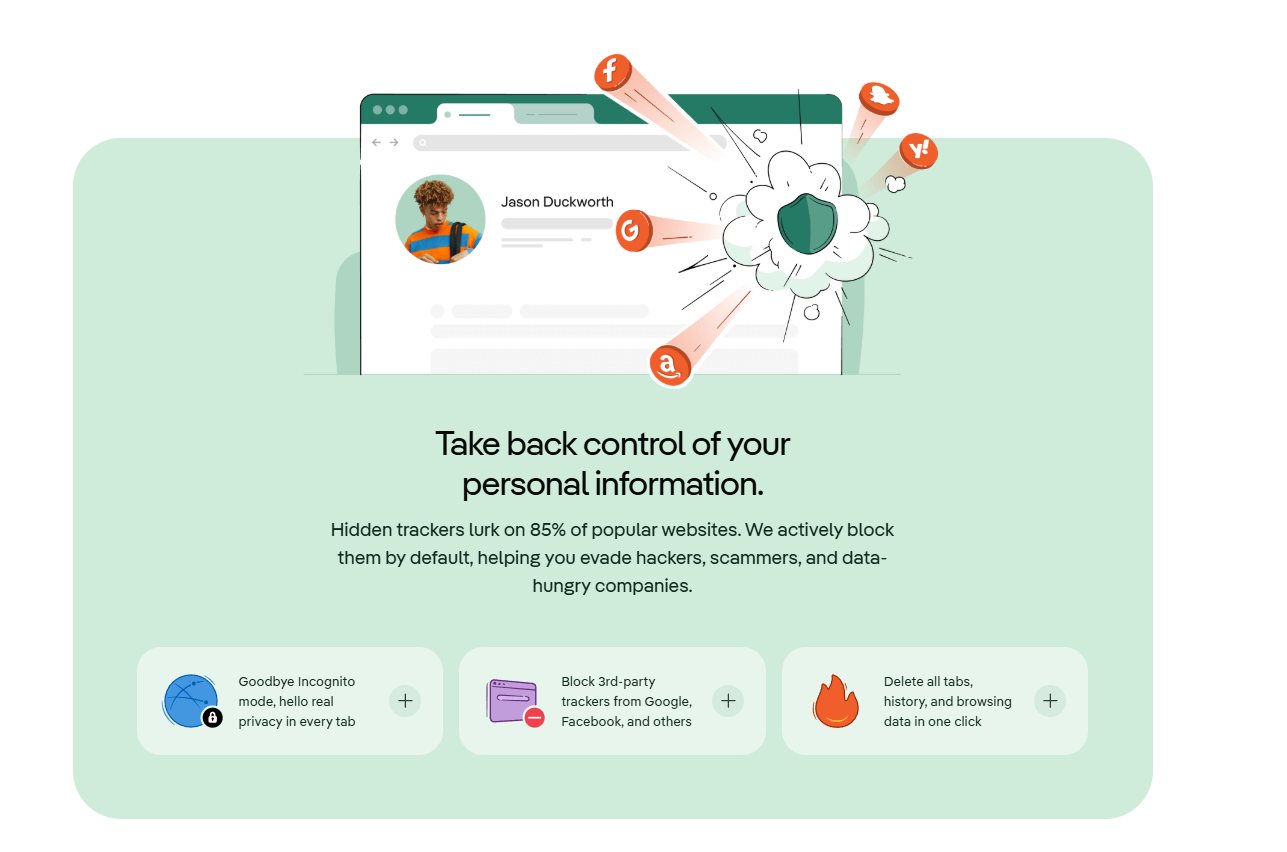
- What jobs it does: An internet browser and search engine. DuckDuckGo’s About page defines the product as “like Google but never tracks your searches.”
- Who it’s for: Internet users.
- What pains it solves: Security and privacy issues when surfing the internet (“Hidden trackers lurk on 85% of popular websites… evade hackers, scammers, and data-hungry companies.”)
- What gains it delivers: Protection, privacy, and peace of mind.
- How it differentiates: The unique value is privacy by default: DuckDuckGo delivers the same search and browsing as the incumbents while never collecting user data (“built for data protection, not data collection.”)
3. Zapier. “Your Tools. Your rules. Any AI.”
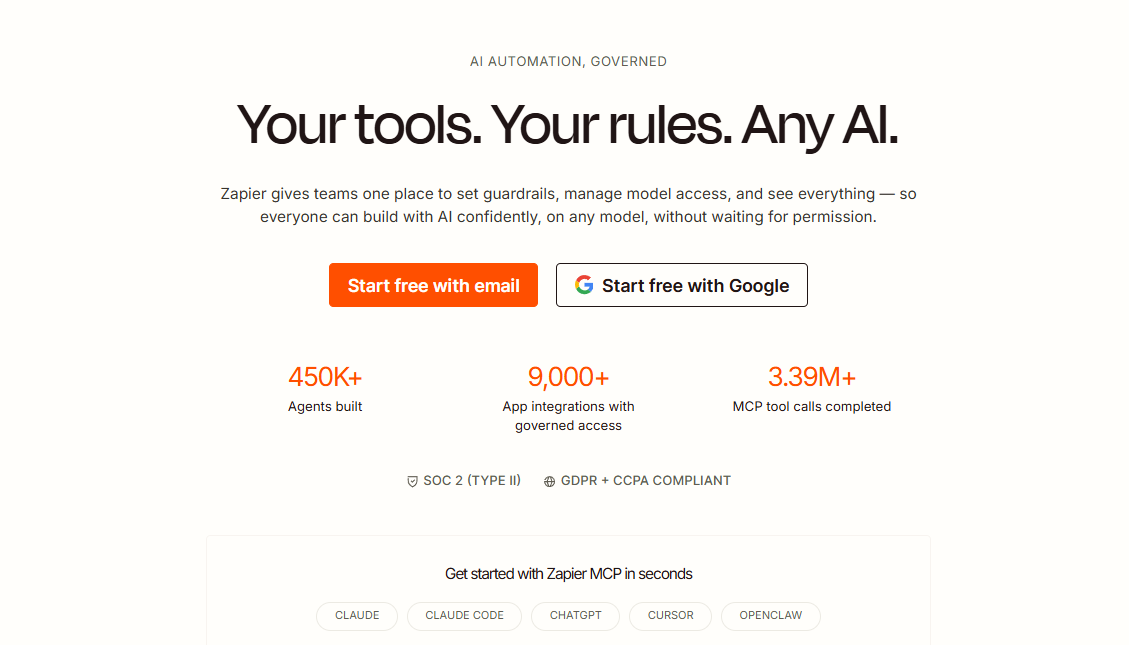
- What jobs it does: Connecting any AI to 9,000+ apps and running agents across them.
- Who it’s for: Teams whose AI adoption has outrun their controls, “from the Fortune 500 to first-time founders.”
- What pains it solves: Lack of security guardrails and visibility into how AI agents use apps, lengthy internal approval processes, and growing AI bills (“Your AI bill is climbing. Is the value keeping up?”)
- What gains it delivers: Building with AI confidently, without waiting for permission, at “71% lower cost per run, on average.”
- How it differentiates: The unique value is governance depth (“Most platforms give you a binary choice: allow an app or block it. Zapier goes deeper.”)
Putting Value Proposition on Your Website
Your value proposition rarely appears verbatim on a website. Instead, it gets distributed across the site.
The three examples above split the load three different ways:
- Gusto puts the jobs in the headline, the audience in the subheadline, and saves its differentiation claims for the FAQ at the bottom of the page.
- Zapier leads with a memorable, tagline-style headline (“Your tools. Your rules. Any AI.”) and lets the subheadline carry the working copy: who it’s for, what you can do, and why you can do it confidently. The pains each get their own section further down.
- DuckDuckGo spends its headline on the ask and the reasons (“Switch to DuckDuckGo. It’s private and free!”), lays the gains out on three labeled cards, and delivers the differentiation as a mid-page comparison table.
Visitor attention still concentrates near the top of a page, so put the elements a visitor needs above the fold: who it’s for and what they get. Let differentiation detail develop below it.
Answer the four questions and test
Gusto, Zapier, and DuckDuckGo sell wildly different things, but their value propositions answer the same four questions: who it’s for, what’s in their way, what they hope to gain, and why this option wins. Yours has to answer them too, in your customers’ words rather than yours.
Once it’s written and on your site, the remaining question is whether visitors actually read and believe it.
Crazy Egg’s heatmaps and session recordings show you how people behave around the elements communicating your value proposition, and A/B testing lets you pit the next versions against the current ones. Try it free for 30 days.
Frequently Asked Questions
What are the most common value proposition mistakes?
The most common value proposition mistakes are defining the audience too broadly, listing features instead of the outcomes customers care about, and making claims any competitor could copy. The other big one is skipping validation: a value proposition that hasn’t been tested outside may land internally but not with real customers.
What is an employee value proposition?
An employee value proposition (EVP) is what a company offers employees — compensation, growth, culture — and what they expect of them in return. It’s the reason a candidate picks your company over another job offer.
Where a customer value proposition argues why someone should buy from you, an EVP argues why someone should work for you.
How often should you update your value proposition?
There’s no fixed schedule for updating a value proposition, and many don’t change for years. Revisit it whenever the conditions that made it true change. For example, when competitors catch up, the market shifts, or customer expectations evolve.