You’ve optimized title tags, meta descriptions, and heading structures based on SEO best practices. Search traffic has increased, but you can’t tell what’s driving clicks — or which element to prioritize in future content.
SEO A/B testing demonstrates causation, not just correlation. This guide shows you when it makes sense to use split-testing for SEO, which elements to check, and how to analyze your experiments.
What Is SEO A/B Testing?
SEO A/B testing is a method of strategically applying changes to a group of pages on your website and analyzing the impact on search results. The subset you include in the experiment is known as the variant group, while the unchanged pages represent the control group.
For example, you could use SEO split testing to check the impact of a specific title tag change to ecommerce product pages. If you have 100 product pages, you could update 50 of them and leave the other 50 as-is — and then review the effect on search engine results pages (SERPs) and traffic.
It’s similar to the kind of A/B testing you’d use for conversion rate optimization (CRO). Both methods let you run website tests to determine which factors produce the best results. Then, you can optimize future content to include the elements you can prove work best.
But there are some important differences between the two types of experiments.
Traditional A/B testing doesn’t work for SEO because you can’t provide two versions of the same page to search engines. Google considers this cloaking, which goes against the search engine’s spam policies. This approach can also lead to duplicate content, which can negatively affect SEO.
That’s why SEO split testing divides pages, updating one subset with a specific change and leaving the others as-is. In contrast, standard A/B testing divides users, randomly directing each group to one version of a page.
The end goals also differ. User testing optimizes for on-page conversions, while SEO A/B testing primarily optimizes for clicks and search traffic.
When SEO A/B Testing Makes Sense (and When It Doesn’t)
In theory, SEO experiments might sound pretty powerful. But in reality, they only make sense in specific circumstances.
What You Need Before You Start Testing
You shouldn’t run SEO tests without these elements:
Substantial Impressions and Traffic
You can’t make informed decisions based on a limited number of results. For SEO A/B tests to reach statistical significance, the pages you plan to test should have over 10,000 organic sessions per month. Some A/B testing tools recommend 30,000.
If your site only gets a few hundred impressions or clicks per month, you’ll need more time (months not weeks) to gather enough data. During this time, any number of external factors can affect your results, potentially invalidating the test.
Pages with Shared Templates
To create variant groups and control groups, you’ll need multiple pages that use the same template or structure. For example, you’ll need multiple category pages, product pages, or blog posts.
If your site is relatively new and only has a handful of pages, it’s too early to run SEO experiments. Wait until your site is more developed to launch these tests.
Clear Hypothesis
Like any experiment, SEO tests need a hypothesis. For example, you might suspect that making a specific change to your meta descriptions will improve clicks and lead to more search traffic.
If you aren’t sure what to change or why, you’re not ready for SEO testing. Instead, spend some time analyzing your SEO analytics and looking for patterns so you can identify ideas to test.
Alternatives If You’re Not Ready for Split Testing
Consider these options if SEO A/B testing doesn’t make sense for your website:
Time-Based Testing
If your search impressions or organic traffic numbers are too low for split testing, run a time-based test instead. Update a specific set of pages for a preset time period (e.g., three months).
Then, compare the impression and traffic results before and after the test period. If you see positive results, consider rolling out the change to a wider group of pages.
Small-Scale Experiments
Have an idea that could dramatically improve rankings and traffic? Don’t test it on key pages that already rank well or that drive the traffic you depend on for leads and conversions.
Instead, experiment with less critical pages. If you see positive results, consider rolling out the update to more critical pages.
What to Test: Elements to Include in SEO Experiments
Here are some SEO elements to consider testing, including both beginner-friendly and advanced options.
Simple SEO Tests to Get Started
Many SEO analysts start by testing:
- Title Tags: Test keyword placement at the beginning or end, add numbers or years, or incorporate questions instead of statements.
- Meta Descriptions: Compare shorter versus full-length descriptions or call to action (CTA) placement.
- Alt Text: Add keywords to the alt text for relevant images.
Advanced SEO Tests Worth Running
These tests are more technically advanced but can also yield useful results:
- Internal Linking: Change your anchor text approach or test the number or placement of internal links. Better internal linking can boost page authority, which can improve ranking and traffic.
- Content Length: Compare short-form versus long-form content to determine which format contributes to better rankings, on-page engagement, and conversions.
- Structured Data: Implement schema markup to see if it improves how your pages rank on the SERP. Test FAQ, product, video, or HowTo schema.
How to Run an SEO A/B Test: Step-by-Step Process
Use this step-by-step workflow to set up your first SEO split test.
Step 1: State Your Prediction
First, get clear on the hypothesis you intend to test. Use a framework like: “We think [change] will improve [metric] because [reason].”
For example, you might say: “We think writing short (e.g., optimized for mobile), actionable meta descriptions will improve click-through rates (CTRs) because it conveys the takeaway more efficiently and drives action.”
Step 2: Create a Control Group and Select Pages to Test
Next, separate the control group from the variant group. Each group should contain pages with the same layout or structure. For example, test blog posts against other blog posts, not against product pages.
Aim to have roughly the same traffic across the two groups. Avoid putting all your high-traffic blog posts in one group or you’ll get skewed results.
If you use an SEO A/B testing tool (see recommendations below) you can automate this process to some extent. Otherwise, manually create a list of the two groups.
Step 3: Update Pages in the Variant Group
After deciding on groups, use your hypothesis to update the variant pages. Make the change (e.g., updating the meta description) and republish each page. Don’t create and publish multiple versions of the test pages or you’ll end up with duplicate content.
For best results, use server-side testing, which renders the changes on your server before users ever see the page. Client-side testing renders JavaScript in the user’s browser, which means they may not be accurately reflected in search results.
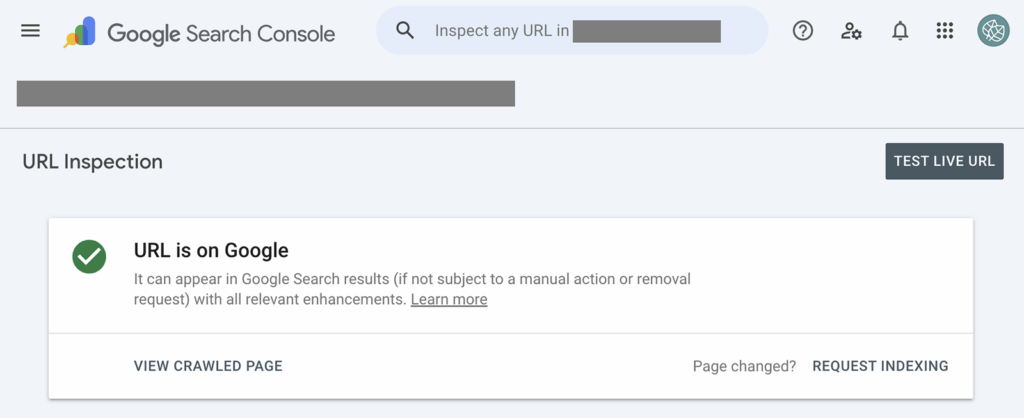
Then, allow time for Google to crawl and reindex the variant pages. Speed up the process by using the URL Inspection tool in Google Search Console to prompt Google to reindex these pages.
Step 4: Analyze the Results
Let the test run for at least two weeks and preferably for a month or longer. Then, analyze performance for the control group and the variant group.
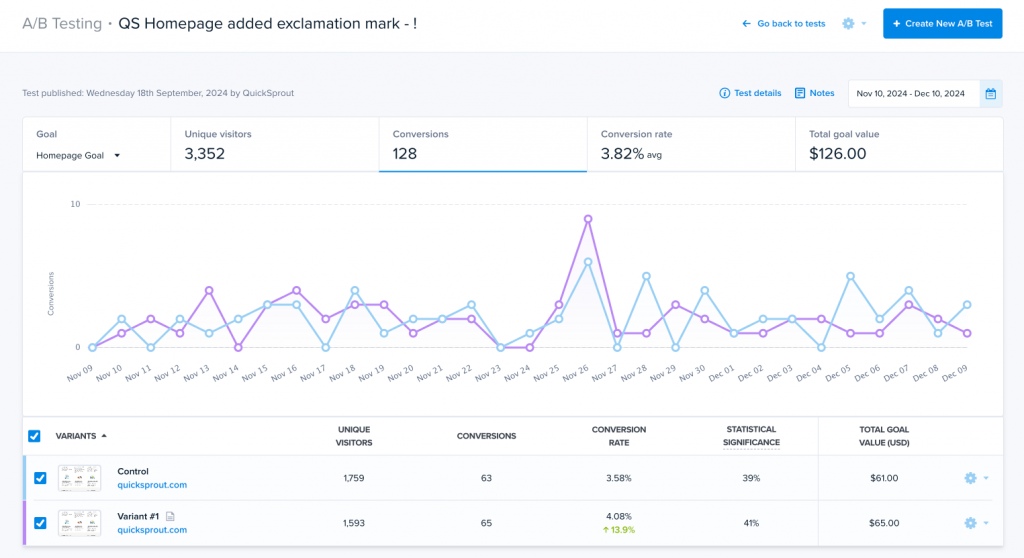
A dedicated SEO A/B testing tool will compare the two groups and determine if the test has reached statistical significance. If so, it will show group came out ahead.
If you’re running the experiment manually, use a pre-test/post-test analysis. Compare performance for the variant group before and after the update. Look for a clear upward or downward trend to tell if the test is conclusive.
With SEO A/B tests, you’re typically looking for traffic-related changes. Has the variant group experienced an increase in traffic during the test period?
Step 5: Roll Out Winners or Revert Losers
After analyzing the results, put your findings to work. If the variant wins, apply the change to all related pages. Continue to monitor performance over time.
If the variant loses, revert the change. Consider reworking your hypothesis and running another test.
And if the results weren’t conclusive, consider letting the test run longer or testing a change that makes a bigger impact to your SEO performance.
SEO A/B Testing Tools and Resources
Use these A/B testing and SEO tools to simplify experiments and analysis.
Dedicated SEO Testing Platforms
SEOTesting
SEOTesting handles controlled SEO experiments, including a split testing option that makes it easy to test hypotheses at scale. It’s helpful for minimizing risks from major changes and validating your SEO efforts.

SearchPilot
SearchPilot offers both SEO and generative engine optimization (GEO) testing, helping you win in traditional and AI search. It automates page groupings, forecasts traffic, and checks for statistically significant results so you can prove the impact of SEO.

seoClarity
seoClarity tests everything from title tags and meta descriptions to schema and internal links, helping you make data-driven decisions about your SEO strategy. The platform’s ROI data ensures that the changes you make positively affect your bottom line.

Website Analytics Tools
Whether or not you use a dedicated platform to run your A/B tests, SEO analytics tools help you monitor and understand the results.
Google Search Console
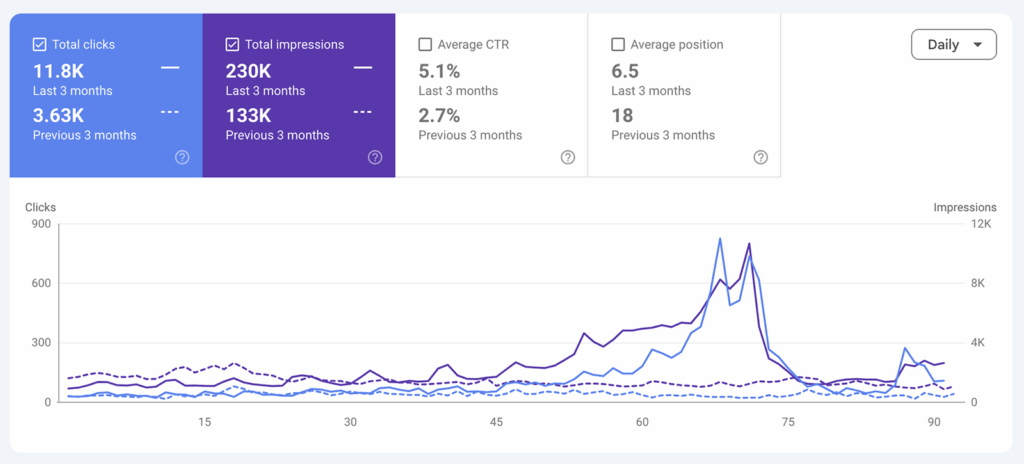
Google Search Console reveals patterns in search impressions and clicks. Its comparative metrics make it easy to see what’s changed month over month.
Google Analytics
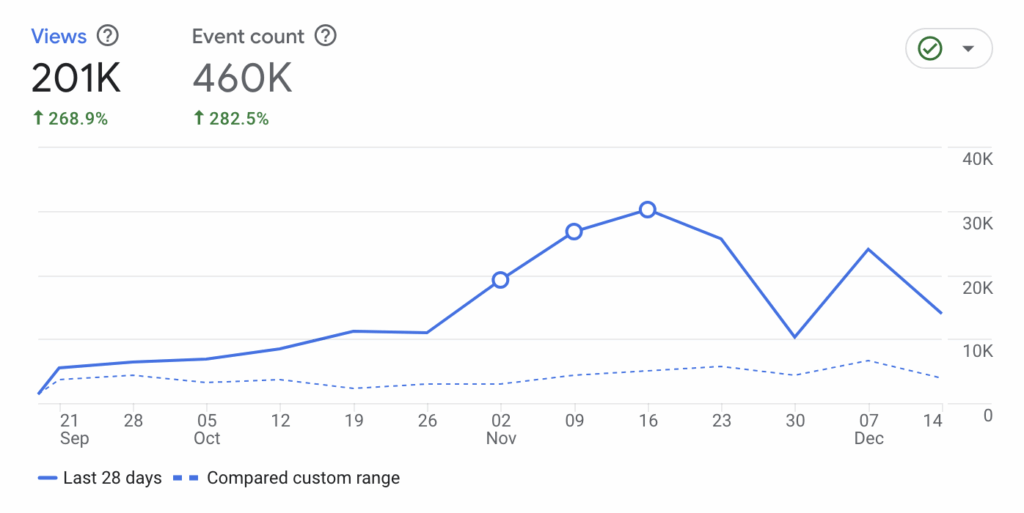
Google Analytics tracks search traffic as well as how site visitors engage with your content. Use this data to see what kind of traffic your SEO efforts are tracking — including the conversions and revenue they generate.
Crazy Egg
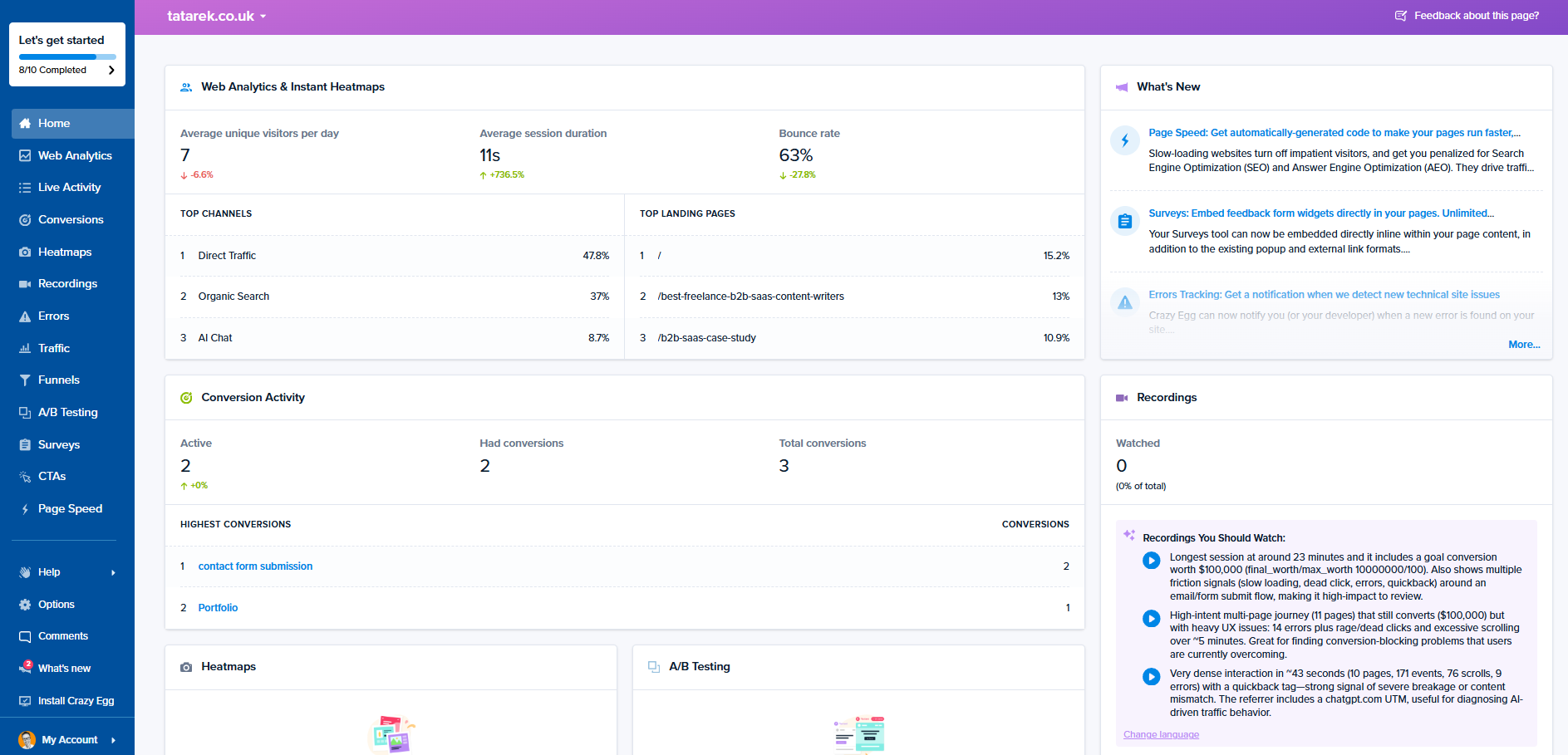
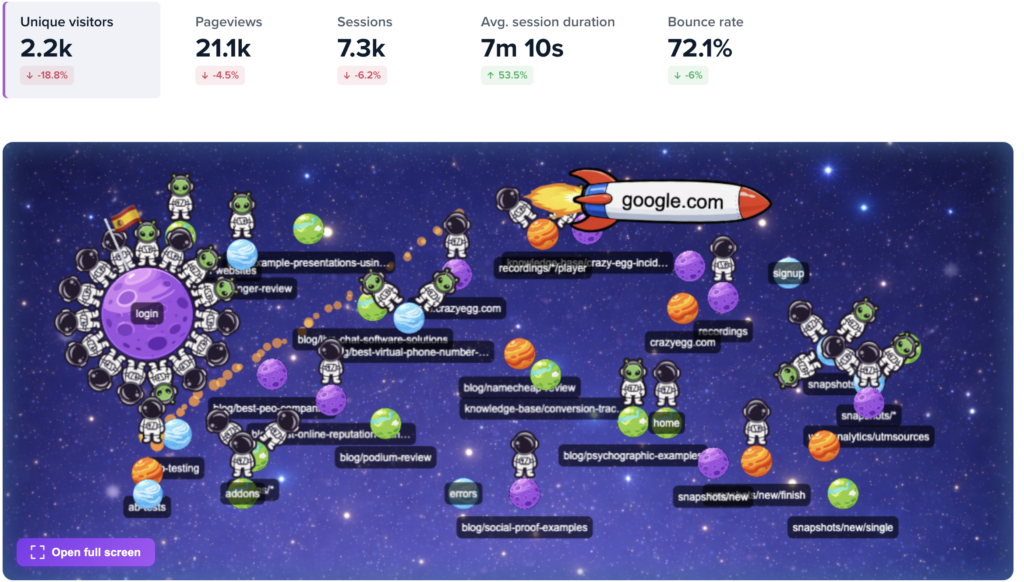
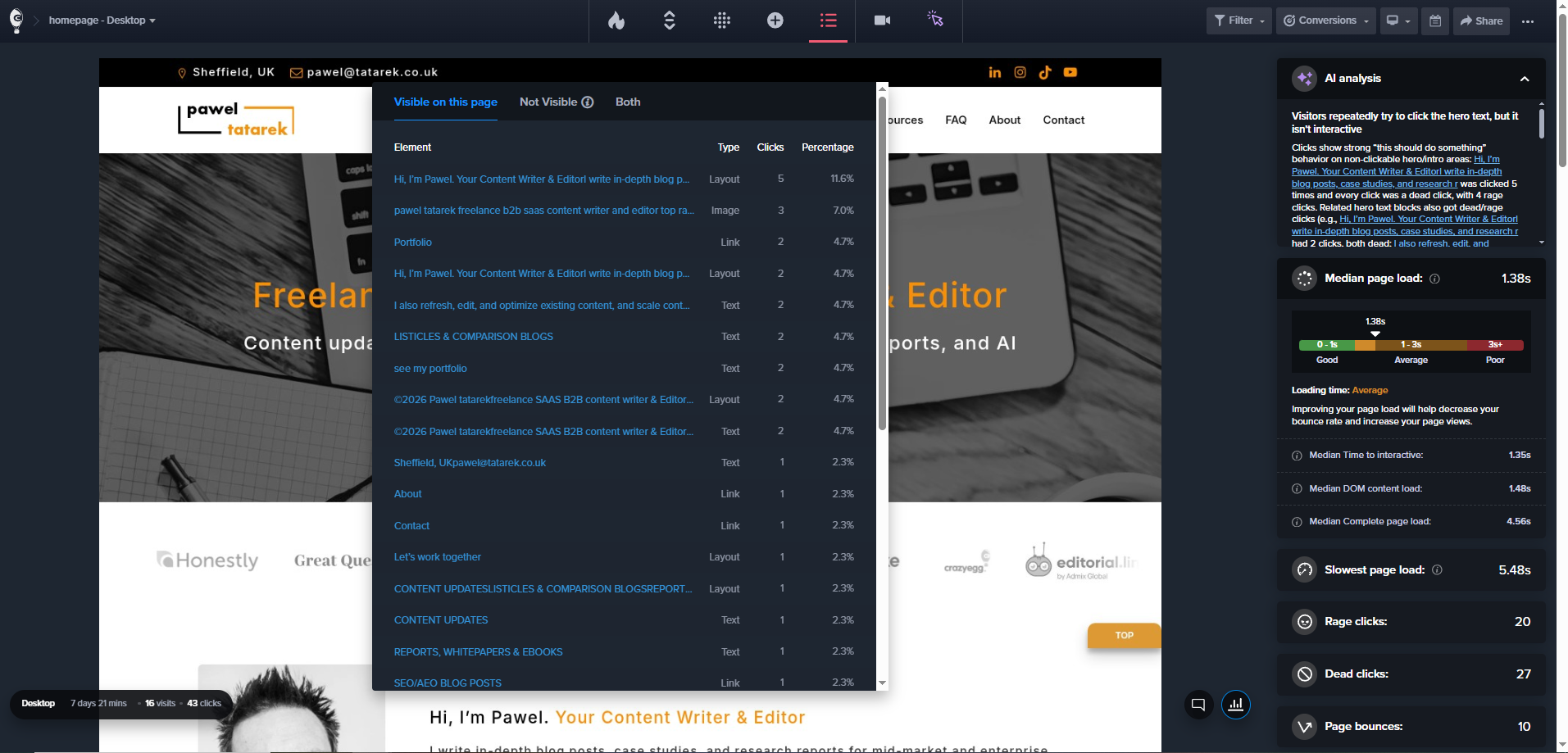
Take your engagement analytics a step further with a tool like Crazy Egg. Heatmaps show where visitors click and scroll so you can see how they engage with your content once they click over from search.

Once you have a better understanding of how visitors navigate your website, you can take steps to optimize for both SEO and user experience. For example, say your heatmap shows that visitors routinely ignore important content or CTAs below the fold. You can test moving these elements higher to improve leads or conversions.
Common SEO Testing Mistakes and How to Avoid Them
These mistakes can compromise your results and negatively impact your SEO strategy. Here’s how to avoid them.
Running SEO Experiments Too Soon
If your website only gets a few hundred search impressions or clicks per month, it’s likely too early to attempt SEO tests. Instead, focus on foundational SEO efforts first.
Work on improving keyword rankings and increasing search traffic. Once your site routinely gets over 10,000 clicks per month, you can test different SEO variables.
Not Accounting for External Factors
Not every change to your SEO results will come from your tests. In many cases, factors like seasonal traffic patterns, changes to the competitive landscape, or even Google algorithm updates can skew your results.
When you analyze the outcomes from your tests, keep these external factors in mind. If you determine that they’ve had an outsized effect on your test, consider extending the time frame before drawing conclusions or making updates across your website.
Drawing Conclusions Too Quickly
If you spot major changes to your search engine rankings or traffic volume a few days into an A/B test, you might be tempted to call it. But arbitrarily stopping experiments early is rarely the right decision.
Plan to run these tests for at least two weeks — and ideally up to four weeks. This allows enough time for the test to reach statistical significance so you can make informed decisions based on the results.
Testing the Wrong Variables
When SEO is your priority, the variables you test should relate to search. For example, testing color changes or button placements probably won’t impact search. They’re better suited for CRO testing, not SEO A/B testing.
This type of testing works when you change one variable at a time. If you try to use it for multivariate testing, you’ll struggle to determine which of the many variables caused the result.
To get the most from SEO A/B tests, prioritize SEO elements and choose one variable per test. Run conversion optimization tests separately using dedicated tools.